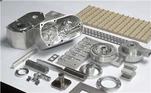
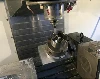
Precision machining is a manufacturing process that involves the use of computer numerical control (CNC) machines, precision lathes, milling machines, and other advanced equipment to produce parts with high accuracy and tight tolerances. This process is critical in the production of components for various industries, including aerospace, automotive, medical, and electronics. Here are some of the key characteristics of precision machining:
High Accuracy: Precision machining is known for its ability to produce parts with very close dimensional tolerances. This means that the final product will have measurements that are very close to the intended design specifications, often within a few microns or thousandths of an inch.
Complex Geometries: Advanced machining centers are capable of creating complex shapes and contours that would be difficult or impossible to achieve with traditional manual machining methods. This allows designers to create innovative parts that maximize functionality and efficiency.
Consistency: Precision machining ensures that each part produced is identical to the next, providing a high level of consistency. This is particularly important in industries where parts must be interchangeable or where quality control is critical.
Material Efficiency: With the use of computer-aided design (CAD) and computer-aided manufacturing (CAM) software, precision machining can optimize the use of raw materials, reducing waste and improving cost efficiency.
Surface Finish: Precision machining can achieve a high-quality surface finish on parts, which is essential for reducing friction, wear, and corrosion. This is particularly important in applications where the performance of the part is affected by its surface characteristics.
Tight Tolerances: The tight tolerances achieved through precision machining are essential for ensuring that parts fit together correctly and function as intended. This is especially important in industries where the performance of assembled products depends on the precision of individual components.
Versatility: Precision machining is not limited to a specific range of materials or part sizes. It can be used to manufacture a wide variety of parts from a range of materials, including metals, plastics, and composites.
Automation and Speed: CNC machines and other automated equipment used in precision machining can operate at high speeds, allowing for the rapid production of parts. This is particularly beneficial in high-volume production environments.
Quality Control: The use of advanced measurement and inspection tools ensures that quality control is maintained throughout the machining process. This helps to identify and correct any potential issues before the parts are used in final assembly or sold to customers.
Customization: Precision machining allows for the production of custom parts tailored to specific requirements. This is invaluable for industries that require unique components or where standard parts do not meet the necessary performance criteria.
In summary, precision machining is a highly specialized process that offers a range of benefits, including high accuracy, complex geometries, consistency, material efficiency, high-quality surface finish, tight tolerances, versatility, automation, speed, quality control, and customization. These characteristics make it an essential manufacturing method for industries that demand precision and quality in their products.