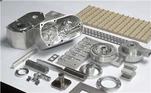
Machining is a fundamental manufacturing process that involves the removal of material from a workpiece to create or modify its shape and achieve desired dimensions, tolerances, and surface finishes. Here's an overview of the basic tasks involved in machining:
Setup: This is the initial stage where the workpiece is securely mounted on a machine tool, such as a lathe or milling machine, using vises, clamps, or fixtures. The setup also includes selecting the appropriate cutting tool and configuring the machine's settings.
Cutting Tool Selection: The choice of cutting tool depends on the material being machined, the desired finish, and the operation being performed. Common cutting tools include drills, end mills, lathe tools, and saws.
Cutting Parameters: Machinists must determine the optimal cutting parameters, such as speed, feed rate, and depth of cut, to ensure efficient material removal without causing tool wear or damage to the workpiece.
Material Removal: The cutting tool is used to remove material from the workpiece. This can involve various operations such as turning, milling, drilling, boring, or grinding, depending on the desired shape and finish.
Coolant Use: To dissipate heat and prolong tool life, cutting fluids or coolants are often used during machining. They also help to wash away chips and reduce friction between the tool and the workpiece.
Inspection: After material removal, the workpiece is inspected to ensure it meets the required dimensions and tolerances. This can involve the use of calipers, micrometers, or more advanced measurement systems like coordinate measuring machines (CMMs).
Finishing: Once the basic shape is achieved, finishing operations may be performed to refine the surface finish and achieve the desired aesthetic or functional properties. This can include honing, lapping, or polishing.
Cleaning: After machining, the workpiece is cleaned to remove any residual coolant, chips, or cutting debris. This prepares the part for further processing or final assembly.
Quality Control: Throughout the machining process, quality control checks are performed to ensure that the part meets the specifications set by the design engineer. This can involve visual inspections, dimensional checks, and surface finish evaluations.
Maintenance: Regular maintenance of the machine tools and cutting tools is essential to ensure consistent performance and part quality. This includes tasks like tool sharpening, machine calibration, and preventive maintenance.
Machining is a critical process in the manufacturing of precision components, and it requires a combination of skilled labor, advanced equipment, and meticulous attention to detail to produce high-quality parts.