

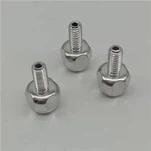
The surface treatment process of precision components is a crucial step in their manufacturing process. It involves applying different types of finishes to improve their aesthetic appearance, increase durability, and offer resistance to wear and tear.
The most commonly used surface treatment processes for precision components are:
1. Electroplating: This process involves the deposition of a thin layer of metal on the surface of the component through electrolysis. It is used to protect the component from corrosion, improve its conductivity or simply for decorative purposes.
2. Anodizing: This process involves the formation of an oxide layer on the surface of the component. It offers excellent resistance to wear and tear, corrosion, and adds to the aesthetic appeal of the component.
3. Passivation: This process involves the removal of impurities and contaminants from the surface of the component to improve its corrosion resistance.
4. Powder coating: This process involves the application of a dry powder electrostatically on the surface of the component, which is then cured at high temperatures. It offers excellent resistance to corrosion, chemicals, and UV rays.
5. Diamond-like coating (DLC): This process involves the deposition of a thin layer of diamond-like carbon on the surface of the component. It offers excellent wear resistance and hardness.
Overall, the choice of surface treatment process depends on the application of the precision component, the desired properties, and the budget available for the process.
Surface Treatment Process Of Precision Components
Apr 13, 2023




Send Inquiry
Latest News

Contact Us
- Tel: +8618021543605
- Fax: +86-25-58659205
- Email: cnmorong@yeah.net
- Email: sales@mrmachining.com
- Add: 28#, Taixi Rd, Pukou, Nanjing, Jiangsu, China