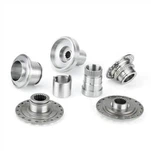
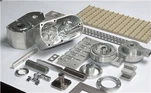
Precision parts processing is an advanced manufacturing technique that focuses on the creation of components with high levels of accuracy and quality. This method is essential for industries where the performance and reliability of machinery and systems are paramount. Here's an introduction to precision parts processing, emphasizing the pursuit of excellent process and quality:
Introduction to Precision Parts Processing:
Precision parts processing is the manufacturing of components with very tight tolerances, meaning the parts are made to exacting specifications. This level of precision is necessary for applications where even minor deviations can lead to performance issues or safety concerns.
The Pursuit of Excellent Process:
Sophisticated Machinery: Precision parts processing utilizes state-of-the-art machinery, including CNC (Computer Numerical Control) machines, which can produce parts with incredible accuracy and repeatability.
High-Quality Materials: The selection of high-quality materials is crucial. These materials must be able to withstand the stresses and conditions that the parts will be subjected to in their final application.
Advanced Techniques: Techniques such as wire electrical discharge machining (WEDM), also known as wire cutting, are used to achieve the required precision. These techniques allow for the creation of complex geometries that would be impossible or very difficult to achieve with traditional machining methods.
Design Optimization: Before any machining begins, the part design is optimized for manufacturability. This step ensures that the part can be produced efficiently and to the required level of precision.
Skilled Workforce: A highly skilled workforce is required to operate the machinery and to make the fine adjustments that are often necessary to achieve the desired level of precision.
The Pursuit of Quality:
Tight Tolerances: Precision parts must meet tight tolerances, which means the actual dimensions of the part must be very close to the nominal dimensions specified in the design.
Surface Finish: The surface finish of precision parts is also critical. A smooth, even surface can reduce wear and extend the life of the part.
Quality Control: Rigorous quality control processes are in place to inspect each part for any deviations from the design specifications. This can include visual inspections, dimensional checks, and non-destructive testing methods.
Consistency: Precision parts processing aims for consistency in production, ensuring that each part produced meets the same high standards.
Continuous Improvement: There is a continuous drive to improve processes and quality. This can involve refining existing techniques, adopting new technologies, and implementing feedback from quality control checks.
Applications of Precision Parts:
Precision parts are used in a wide range of industries, including aerospace, automotive, medical devices, and electronics. In these industries, the high performance and reliability of precision parts are critical for the safe and efficient operation of equipment.
In conclusion, precision parts processing is a field that demands the highest standards of process and quality. It involves the use of advanced technology, high-quality materials, and skilled personnel to produce parts that are essential for many of the technologies and machines that we rely on in modern society. The pursuit of excellence in this field is a continuous journey, driven by the need for ever-higher levels of performance and reliability in our machinery and systems.