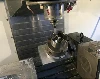
Precision machinery technology is a cornerstone of modern manufacturing, enabling the production of high-quality, high-precision components that are essential across various industries. Here's how precision machinery technology can be leveraged to achieve high-quality development:
Enhanced Product Quality and Reliability: Precision machining ensures tight tolerances and high surface quality, which is critical in industries like aerospace where components must withstand extreme conditions. This technology can produce parts with submicron shape accuracy and nanometer surface roughness, which directly improves the performance and reliability of products such as aircraft engine blades and spacecraft parts .
Competitive Advantage: High-precision products meet the market's demand for quality and performance, thus enhancing a company's competitive edge. In the smartphone industry, for example, precision machining can lead to smoother operating experiences and superior imaging capabilities, giving products a competitive market advantage .
Cost Efficiency: While the initial investment in precision machinery can be high, the long-term reduction in production costs through decreased scrap rates and increased efficiency offsets this. Precision machining can accurately control material usage, reducing waste, and minimize the need for additional finishing work, shortening the production cycle .
Innovation in Design: Precision machining allows designers to push the boundaries of product design, creating more complex and optimized structures and functions. This is particularly important in emerging fields like新能源车电池包的设计,where precision machining can create compact and efficient heat dissipation structures, improving battery performance and safety .
Broad Application Spectrum: Precision machinery technology is not just limited to a few industries; it has a wide range of applications from automotive, electronics, and medical devices to advanced optics and photonics. For instance, in the automotive industry, precision machining is used to manufacture engine components that improve combustion efficiency and reduce fuel consumption .
Support for Emerging Technologies: As technology advances, precision machining is playing a crucial role in emerging fields such as quantum computing and biomedical engineering. The ability to manufacture parts with high precision is essential for the development of nanoscale devices and structures in nanotechnology and for creating artificial organs and implantable medical devices in biomedicine .
Intelligentization of Manufacturing: Precision machinery is a key component in the intelligentization of manufacturing, which drives technological innovation within industries. Intelligentization has both horizontal and vertical technology spillover effects, promoting innovation across different sectors .
Environmental Sustainability: Ultra-precision machining (UPM) has been recognized for its potential to contribute to environmental sustainability in manufacturing. The technological and methodological advancements in UPM can lead to more efficient and eco-friendly production processes .
Market Growth: The global market for precision components is growing, with UPM playing a significant role in this trend. The market analysis indicates an increasing adoption of micromachining systems in various industries, which values the precision and quality that UPM offers .
In conclusion, precision machinery technology is integral to achieving high-quality development by enhancing product quality, driving innovation, and supporting sustainable practices. As industries continue to evolve, the role of precision machinery in enabling high-precision manufacturing will only become more critical.