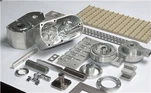
Considerations for Material Selection in Precision Mechanical Component Manufacturing
Considerations Based on Service Performance
Strength and Hardness: The selection is based on the component's service environment and load-bearing requirements. For example, engine crankshafts, which endure significant alternating loads, are often made from high-strength alloy steels such as 40Cr to prevent deformation and fracture under complex long-term stress conditions. In contrast, cutting tools for machining high-hardness materials are typically made from cemented carbides, which offer extremely high hardness and wear resistance, ensuring a sharp cutting edge.
Wear Resistance: For components operating in frictional environments, such as gears and bearings, materials with good wear resistance are essential. For instance, gears in automotive transmissions are usually made from carburizing steels like 20CrMnTi. After carburizing and quenching, these gears achieve high surface hardness and wear resistance, reducing wear during transmission and extending service life.
Corrosion Resistance: Components exposed to humid, acidic, or alkaline environments, such as valves and pipes in chemical equipment, require corrosion-resistant materials. For example, 316L stainless steel, with its excellent corrosion resistance and resistance to intergranular corrosion, can maintain stable performance in harsh chemical environments.
Thermal Stability: Components operating in high-temperature environments, such as turbine blades in aero-engines, need materials with good thermal stability. Nickel-based superalloys, known for their superior high-temperature strength, oxidation resistance, and resistance to hot corrosion, are commonly used for turbine blades. These materials maintain their shape and performance at high temperatures, ensuring the normal operation of the engine.
Considerations Based on Machinability
Cutting Performance: To improve machining efficiency and quality, materials should have good cutting properties. For example, free-cutting steels (such as Y12 and Y15) are enhanced by adding elements like sulfur and lead, which reduce tool wear, cutting forces, and improve chip breakage during machining, thereby increasing efficiency and surface quality.
Forging Performance: For components that require forging, the material's forgeability is crucial. For instance, aluminum alloy 6061 has good forgeability and can be easily deformed in a hot state to form complex-shaped components with improved mechanical properties after forging.
Welding Performance: When components need to be assembled by welding, materials with good weldability should be selected. For example, Q235 steel has excellent welding properties and is less prone to defects such as cracks and porosity during welding, ensuring the strength and sealability of the welded joints. It is widely used in various welded structural components.
Heat Treatment Performance: Many precision mechanical components require heat treatment to achieve desired properties. For example, 45 steel can achieve a good combination of strength and toughness through quenching and tempering. However, strict control of heat treatment parameters is necessary to prevent deformation and cracking.
Considerations Based on Cost
Material Cost: Within the constraints of meeting service and machining requirements, material cost is a significant factor. For general mechanical components with lower performance demands, such as mechanical brackets and housings, lower-cost carbon steels like Q235 can be used. In contrast, for critical components in high-performance applications, such as aerospace parts, high-performance specialty materials are necessary despite their high cost.
Machining Cost: Different materials have varying machining difficulties and costs. High-performance materials like titanium alloys, although superior in performance, are challenging and expensive to machine. When selecting materials, both material and machining costs should be evaluated comprehensively. For large production volumes, cost-effective materials with optimized machining processes can reduce overall costs.
Life-Cycle Cost: Choosing materials with good performance and long service life may have a higher initial cost but can reduce replacement frequency and maintenance costs over time, lowering the overall life-cycle cost. For example, using high-quality bearing materials in large-scale equipment may have a higher purchase cost but can significantly extend maintenance intervals and improve operational efficiency, resulting in lower overall costs.
Other Considerations
Material Availability: Prioritize materials that are readily available in the market to ensure continuous production. Special materials, such as certain rare metal alloys, may have limited supply channels and long procurement cycles, affecting production schedules. When selecting materials, consider their availability and choose alternatives that are more readily accessible and stable in supply.
Environmental Requirements: With increasing environmental awareness, the environmental performance of materials is becoming more important. When selecting materials, consider their impact on the environment during production, use, and disposal. For example, avoid materials containing harmful substances like lead, mercury, and cadmium, and choose recyclable materials to minimize environmental pollution.
Standardization and Generalization of Materials: To facilitate the design, manufacturing, and maintenance of components, materials with high standardization and generalization should be preferred. This reduces the variety and specifications of materials, lowers inventory costs, and improves production efficiency. Standardized materials also have more mature processing techniques and quality standards, which help ensure product quality.