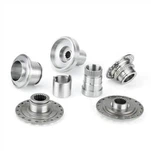
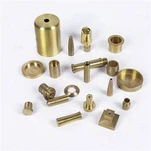
Selecting Appropriate Machining Technologies for Non-Standard Precision Parts
1. Part Geometry & Complexity Analysis
Rotational vs. Prismatic Features:
Predominantly cylindrical/rotational parts: Prioritize CNC turning or turn-mill composite machining
Complex 3D contours, undercuts, freeform surfaces: Require multi-axis (4/5-axis) CNC milling or electrical discharge machining (EDM)
Micro-scale features (<0.5 mm): Consider micro-milling, laser micromachining, or lithography-based processes
Internal vs. External Accessibility:
Deep internal cavities/tight corners: EDM (wire or sinker) or additive manufacturing with post-machining
High aspect ratio holes: Deep-hole drilling, gun drilling, or electron beam drilling
Thin-walled structures: Vibration-sensitive; require adaptive machining, cryogenic cooling, or chemical etching
2. Dimensional Tolerance & Accuracy Requirements
表格
| Tolerance Grade | Appropriate Technology | Typical Capability |
|---|---|---|
| ±0.05 – 0.1 mm (IT10–IT11) | Conventional CNC milling/turning | General precision |
| ±0.01 – 0.05 mm (IT7–IT9) | Precision CNC, grinding, jig boring | High precision |
| ±0.005 – 0.01 mm (IT5–IT6) | Ultra-precision CNC, honing, lapping | Ultra precision |
| < ±0.001 mm (below IT5) | Diamond turning, precision grinding, CMP | Nanometer precision |
Geometric Dimensioning & Tolerancing (GD&T): Tight form tolerances (roundness, cylindricity < 1 μm) may necessitate dedicated processes like centerless grinding or precision honing rather than general CNC.
3. Material Characteristics & Machinability
Metals:
Aluminum alloys: Excellent machinability; standard CNC, high-speed milling
Stainless steels: Work-hardening; require sharp tools, optimal speeds, possible electrochemical machining (ECM) for complex shapes
Titanium/Inconel: Low thermal conductivity, high strength; slow speeds, rigid setups, or non-contact methods (laser, waterjet)
Hardened steels (>50 HRC): Grinding, hard turning with CBN/PCD, or EDM
Engineering Polymers:
PEEK, PTFE, POM: Standard CNC with crystalline chip control; avoid overheating
Brittle polymers: Laser cutting or diamond machining to prevent cracking
Ceramics & Composites:
Alumina, zirconia: Diamond grinding, ultrasonic-assisted machining
CFRP/GFRP: Specialized tooling, waterjet, or vibration-assisted milling to prevent delamination
4. Surface Finish & Functional Requirements
表格
| Required Ra | Technology Selection | Post-Process Needs |
|---|---|---|
| > 3.2 μm | Standard CNC | None |
| 0.8 – 3.2 μm | Precision CNC, optimized parameters | Possible deburring |
| 0.2 – 0.8 μm | Fine CNC, hard turning, precision grinding | Polishing if aesthetic |
| < 0.2 μm | Grinding + honing/lapping, superfinishing | Mandatory multi-stage |
| Optical grade (<0.01 μm) | Diamond turning, magnetorheological finishing | Specialized environment |
Functional Surfaces: Sealing surfaces require specific roughness ranges; bearing surfaces need cross-hatch patterns achievable only through honing.
5. Production Volume & Economic Considerations
Prototype / Single Piece (1–10 units):
Flexible CNC machining without dedicated tooling
Additive manufacturing (SLM, DMLS) for topology-optimized geometries
Rapid EDM electrode fabrication via 3D printing
Low Volume, High Mix (10–1000 units):
Turn-mill centers for complex parts requiring minimal setups
Modular fixturing systems to accommodate variety
5-axis CNC to reduce setup changes
Medium Volume (1000–10000 units):
Dedicated fixtures, automated loading
Combination of rough machining (fast material removal) and finish operations (precision)
Transfer lines or pallet-based flexible manufacturing systems
High Volume (>10000 units):
Dedicated special-purpose machines (SPMs)
Near-net-shape forming (cold heading, powder metallurgy) + finish machining
Automated inspection integration
6. Process Capability & Equipment Availability
In-House vs. Outsourced Capabilities:
Assess existing machine park: axis count, spindle power, precision level, control systems
Evaluate subcontractor specialization for exotic processes (laser texturing, electron beam melting, chemical etching)
Technology Maturity & Risk:
Proven processes (CNC milling/turning/grinding): Lower risk, predictable outcomes
Emerging technologies (hybrid additive-subtractive, ultrasonic vibration-assisted machining): Higher risk but unique capabilities for impossible geometries
7. Lead Time & Supply Chain Constraints
Standard Machining: Typically 1–4 weeks depending on complexity
Processes Requiring Special Tooling/Fixtures: Add 2–3 weeks for design and fabrication
Additive Manufacturing: Reduced tooling time but may require post-processing heat treatment and machining
Global Sourcing Considerations: Proximity for iterative design communication vs. cost optimization for mature designs
8. Quality Assurance & Inspection Compatibility
In-Process Verification: Select technologies compatible with on-machine probing and real-time feedback
Destructive vs. Non-Destructive Testing: Internal features may require CT scanning or sectioning; plan machining allowances accordingly
Traceability Requirements: Aerospace, medical, and automotive sectors demand process documentation; ensure selected technology supports data logging
9. Environmental & Sustainability Factors
Material Waste: Subtractive processes generate chips; near-net processes (additive, MIM) reduce waste for expensive materials
Coolant & Lubrication: Minimum quantity lubrication (MQL), dry machining, or cryogenic cooling reduce environmental impact
Energy Consumption: High-precision processes often require climate-controlled environments; factor into total cost
10. Decision Framework
表格
| Evaluation Criterion | Weight | Scoring Method |
|---|---|---|
| Dimensional accuracy achievement | High | Capability vs. requirement gap analysis |
| Surface finish compliance | High | Process capability index (Cpk) |
| Cost per part | High | Total cost including tooling, setup, inspection |
| Lead time | Medium | Critical path analysis |
| Flexibility for design changes | Medium | Changeover time, reprogramming effort |
| Risk/reliability | High | Historical data, pilot run validation |
| Scalability | Medium | Volume ramp-up capability |
Recommended Approach: Conduct a Pugh matrix or weighted decision matrix comparing candidate technologies against these criteria. Validate through prototype trials before committing to production tooling.
Summary
表格
| Part Characteristic | Preferred Technology Direction |
|---|---|
| Simple rotational, tight tolerance | Precision CNC turning + grinding |
| Complex prismatic, 3D contours | 5-axis CNC milling |
| Rotational + prismatic hybrid | Turn-mill composite machining |
| Hardened material, complex shape | EDM or precision grinding |
| Micro-features, ultra-precision | Micro-machining, laser, LIGA |
| Internal channels, lattice structures | Additive manufacturing + finish machining |
| Very high volume, stable design | Dedicated SPM or near-net + finish |
Selecting machining technology for non-standard precision parts requires holistic systems engineering-balancing geometric complexity, material behavior, accuracy demands, economic constraints, and quality assurance requirements. The optimal solution often involves hybrid process chains rather than single-technology approaches, integrating additive, subtractive, and surface treatment methods to achieve performance targets within acceptable cost and time boundaries.