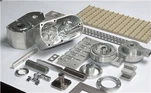
Introduction to Non-standard Parts Processing with Varied Quality Levels
Non-standard parts processing refers to the manufacturing of components that do not adhere to standard sizes, specifications, or designs. These parts are often customized to meet unique requirements or to fit specific applications. The quality of non-standard parts can vary significantly based on several factors, including the complexity of the design, the materials used, the manufacturing processes, and the quality control measures in place.
Key Considerations in Non-standard Parts Processing:
Customization: Each part is tailored to meet specific customer requirements, which may involve unique dimensions, shapes, materials, or features.
Design Complexity: Non-standard parts often involve complex geometries that require advanced design and engineering skills to bring to life.
Material Selection: The choice of material can greatly affect the quality and performance of the part. It is crucial to select materials that can meet the desired mechanical, thermal, and chemical properties.
Manufacturing Techniques: Depending on the design and material, various manufacturing techniques such as CNC machining, casting, forging, or additive manufacturing (3D printing) may be employed.
Quality Control: Implementing stringent quality control measures is essential to ensure that each non-standard part meets the customer's specifications and performance expectations.
Varied Quality Levels in Non-standard Parts Processing:
Prototype Quality: For initial testing and design validation, parts may be produced with a lower level of finish and accuracy, focusing more on form and fit.
Functional Quality: Parts that are intended for functional testing or limited production runs may be produced with a higher level of precision and finish to ensure they perform as expected.
High-End Quality: For critical applications where performance and reliability are paramount, non-standard parts are manufactured to the highest quality standards, with meticulous attention to detail and rigorous testing.
Factors Influencing Quality in Non-standard Parts Processing:
Engineering and Design: The quality of the engineering and design work influences how well the part will meet the intended specifications and perform in its application.
Machining Accuracy: The precision of the machining processes directly affects the quality of the finished part.
Material Quality: High-quality materials are less likely to result in defects and will generally produce more reliable parts.
Surface Finish: The quality of the surface finish can impact the part's appearance, corrosion resistance, and sometimes its performance.
Post-Processing: Operations such as heat treatment, plating, or painting can enhance the quality and properties of the non-standard parts.
Applications of Non-standard Parts Processing:
Custom Equipment: Manufacturing parts for specialized equipment that requires unique components.
Retrofitting and Upgrades: Producing parts for older machinery that are no longer supported by standard manufacturers.
Rapid Prototyping: Creating prototypes for new product development with varying levels of quality depending on the stage of development.
Limited Edition Products: Producing parts for limited runs or special editions that may have unique design features.
Conclusion:
Non-standard parts processing offers manufacturers and customers the flexibility to create components that are tailored to specific needs. While the quality of these parts can vary, it is possible to achieve high-quality results with careful planning, precise engineering, and stringent quality control measures. By understanding the factors that influence quality and by working closely with customers to define their requirements, manufacturers can produce non-standard parts that meet or exceed expectations, regardless of the complexity or unique nature of the components.