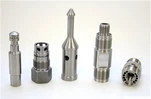
Metal hot working refers to a group of industrial processes used to shape metallic materials while they are in a heated, softened state. The defining characteristic of hot working is that it is performed above the material's recrystallization temperature.The Core Principle: Recrystallization
The fundamental principle behind hot working is recrystallization.
- Recrystallization Temperature: This is the minimum temperature at which the distorted, cold-worked grain structure of a metal can be transformed into a new, strain-free grain structure. This temperature is not a fixed point but is typically 0.5 to 0.7 times the metal's absolute melting temperature.
- Strain Hardening vs. Recovery: When metal is deformed (shaped) at room temperature ("cold working"), it becomes harder and stronger but also more brittle-a phenomenon known as strain hardening or work hardening. If this same deformation is done above the recrystallization temperature, any hardening that occurs is immediately relieved by the simultaneous process of recrystallization and recovery. This allows for extensive and continuous shaping without cracking or excessive energy consumption.
Common Hot Working Processes
Several major industrial processes fall under the category of hot working:
- Hot Rolling: This is the most common hot working process. A large, cast metal piece (an "ingot" or "slab") is heated and passed through a series of rolls to reduce its thickness and achieve a uniform cross-section, producing products like sheets, plates, bars, and structural shapes (I-beams, rails).
- Hot Forging: Metal is heated and then shaped by applying compressive forces, typically using a hammer, press, or die. Forging aligns the metal's grain flow to the shape of the part, resulting in superior strength and toughness. Examples include crankshafts, connecting rods, and hand tools.
- Extrusion: A heated metal billet is placed in a container and forced through a die opening of the desired cross-sectional shape. This process is ideal for creating long, complex solid and hollow shapes, such as window frames, tubes, and structural components.
- Hot Drawing (or Deep Drawing): Similar to cold drawing, but performed at elevated temperatures to allow for more severe deformation without tearing. Used for forming deep, cup-shaped parts.
- Casting (A Special Case): While technically a primary shaping process rather than a secondary one, casting involves pouring molten metal (far above its recrystallization temperature) into a mold. It is included here as a fundamental hot process for forming metal.
Advantages of Hot Working
- High Formability: Metals are much more ductile and plastic when hot, allowing for massive shape changes that would be impossible at room temperature.
- Low Energy Consumption per Unit Volume: Because the metal is softer, less force and energy are required to deform it compared to cold working.
- Refinement of Grain Structure: It can break down coarse, brittle as-cast structures and produce a finer, more uniform grain size, improving mechanical properties.
- Elimination of Porosity: The high pressure and temperature can weld shut internal voids and gas pores present in cast metal.
- No Strain Hardening: The process does not increase strength/hardness through work hardening, which makes the material easier to machine or form further after the process.
Disadvantages of Hot Working
- Lower Dimensional Accuracy: Thermal expansion and contraction, along with scale (oxide) formation, can lead to less precise dimensions and a poorer surface finish compared to cold working.
- Oxidation and Scale: The hot metal reacts with air, forming an oxide layer (scale) on the surface, which must be removed and results in material loss.
- Poor Surface Finish: The scaled surface is rougher.
- Short Tool Life: The high temperatures and abrasive scale can lead to faster wear and degradation of the dies, rolls, and other tooling.
- High Energy Costs: The cost of heating the metal to high temperatures can be significant.
Applications
Hot working is essential in primary metal production and for manufacturing components that require high strength and toughness. It is ubiquitous in industries such as:
- Automotive: Forging engine parts, rolling steel for car bodies.
- Aerospace: Forging critical structural components like landing gear.
- Construction: Rolling I-beams, rebar, and structural plates.
- Shipbuilding: Producing large steel plates and sections.
Conclusion
In summary, hot working is a foundational manufacturing technique that leverages high temperatures to plastically deform metals efficiently and on a large scale. By operating above the recrystallization temperature, it overcomes the limitations of brittleness, enabling the production of large, strong components that form the backbone of modern infrastructure and machinery.