Production of Hardware Stamping and Drawing Components
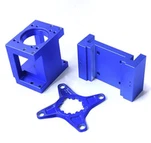
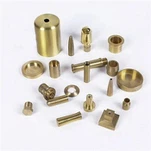
The production of hardware stamping and drawing components refers to the process of manufacturing various shaped and sized parts by using stamping and drawing processes on metal materials. Stamping involves placing metal sheets on a stamping press and using a stamping die to apply force, causing plastic deformation in the metal to achieve the desired shape. Drawing, on the other hand, involves stretching the metal material to its plastic deformation limit to obtain the required shape and dimensions.
Hardware stamping and drawing components are widely used across various industries, such as automotive, electronics, home appliances, and construction. These components play important roles in products, such as connecting, supporting, and fixing parts. Stamping and drawing components are characterized by high precision, high strength, and high stability, meeting the requirements of different industries for parts.
During the production process of hardware stamping and drawing components, tasks such as material selection, die design, and process parameter determination are required. Material selection must consider the product's application environment and requirements to ensure the quality and performance of the product. Die design should be based on the shape and dimensions of the product to ensure precision and consistency. Process parameter determination needs to be adjusted according to the material properties and product requirements to achieve the best processing results.
The production of hardware stamping and drawing components is characterized by high efficiency, cost-effectiveness, and flexibility. It allows for mass production of identical parts, improving production efficiency and product quality. At the same time, it can also be customized according to customer needs to meet the requirements of different products.
In summary, the production of hardware stamping and drawing components is an important manufacturing process with wide applications across various industries. By making rational material selections, designing appropriate dies, and determining suitable process parameters, high-quality and high-precision parts can be produced to meet the diverse needs of different industries.