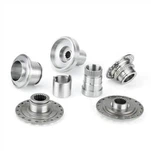
Precision machining is a manufacturing process that utilizes advanced technology and equipment to produce components with high accuracy and complex shapes. It plays a crucial role in various industries, including aerospace, automotive, medical, and electronics. Here's an overview of the current state and future development forecast of precision machining:
Present Situation
Technological Advancements: The industry has seen significant advancements in precision machining technology, including the use of computer numerical control (CNC) machines, which can produce parts with micron-level accuracy.
Materials: There is an increasing use of exotic and high-strength materials that require specialized machining techniques to maintain their properties.
Automation: Automation in precision machining is growing, with robotics and autonomous systems being integrated to increase efficiency and reduce human error.
Quality Control: Advanced inspection and quality control methods, such as 3D scanning and optical measurement systems, are becoming more prevalent to ensure the precision of the final product.
Environmental Concerns: There is a growing emphasis on sustainable manufacturing practices, leading to the development of more environmentally friendly machining processes.
Skilled Workforce: There is a demand for a highly skilled workforce that can operate and maintain sophisticated machinery and understand complex engineering designs.
Future Development Forecast
Smart Factories: The integration of the Internet of Things (IoT) and Industry 4.0 technologies is expected to lead to the creation of smart factories where precision machining processes are fully automated and interconnected.
Additive Manufacturing: Also known as 3D printing, additive manufacturing is predicted to grow in importance, allowing for the creation of complex geometries that are difficult or impossible to produce with traditional machining methods.
High-Speed Machining: The development of materials and machine tools that can withstand higher cutting speeds will lead to increased productivity and reduced manufacturing times.
Precision in Micro and Nano Scales: As technology advances, there will be a greater focus on precision machining at the micro and nano scales, enabling the production of smaller, more intricate components for use in fields like microelectronics and biotechnology.
Customization and Personalization: With the rise of on-demand manufacturing, precision machining will increasingly cater to the customization and personalization of products.
Sustainability: There will be a continued push towards more sustainable machining practices, including the use of non-toxic coolants, energy-efficient machinery, and the recycling of machining waste.
Digital Twin Technology: The use of digital twins to simulate machining processes before actual production will become more common, allowing for better planning and optimization of manufacturing operations.
Artificial Intelligence and Machine Learning: AI and ML will be increasingly used to optimize machining parameters, predict maintenance needs, and improve overall process efficiency.
Global Supply Chains: Precision machining will continue to be a global industry, with companies sourcing components from various countries based on quality, cost, and delivery times.
Regulatory Compliance: As industries become more regulated, precision machining will need to ensure compliance with international standards and regulations, affecting design and production processes.
In summary, the precision machining industry is at the forefront of manufacturing innovation, with ongoing advancements in technology, materials, and processes shaping its current state and future trajectory. The industry is expected to become more automated, efficient, and sustainable, while also focusing on meeting the demands of increasingly complex and customized products.