

CNC processing, or Computer Numerical Control processing, is a manufacturing process that utilizes computer software and specialized machinery to create precise and intricate parts and components. In recent years, CNC processing has become an integral part of industrial automation production, and for good reason. In this article, we will explore some of the advantages and applications of CNC processing in industrial automation production.
Firstly, CNC processing offers unparalleled precision and accuracy. By using computer programming to control the machinery, CNC processing can produce parts with incredible consistency and accuracy. This level of precision is simply not possible with manual operation, and is particularly useful in industries where tolerances are extremely tight, such as aerospace or medical equipment manufacturing.
Secondly, CNC processing enables automation and integration. With CNC machinery, tasks are automated and performed by machines with greater efficiency and consistency. This not only reduces the possibility of errors and improves product quality, but also frees up human labour, allowing production to work around the clock and at higher yields. Moreover, as CNC machinery can be integrated with other automated systems, it allows for greater interconnectivity and streamlines the entire manufacturing process.
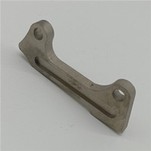
Thirdly, CNC processing can produce complex and detailed parts. CNC machinery can produce parts with intricate shapes and features that would be impossible to manually complete, and at a faster rate. This opens up possibilities of customization and innovation in product design, especially with the use of 3D printing technologies. Moreover, CNC processing can also work with a wide range of materials, including metals, plastics, and ceramics, to create parts with diverse characteristics and properties.
Finally, CNC processing promotes sustainability. By reducing human labour and energy consumption, CNC machining helps to reduce carbon footprint and material waste in manufacturing processes. It also ensures that parts are produced to the highest quality standards and specifications, reducing the likelihood of product recalls or rejections due to defects or inaccuracies.
In conclusion, CNC processing is a critical technology in industrial automation production, allowing for greater precision, efficiency, integration, and sustainability. The versatility and customization capabilities of CNC machinery also allow for innovation and product differentiation. As technology continues to advance, it is clear that CNC processing will play an increasingly important role in the manufacturing landscape.
Application And Advantages Of CNC Processing in Industrial Automation Production
Feb 22, 2024




Send Inquiry
Latest News

Contact Us
- Tel: +8618021543605
- Fax: +86-25-58659205
- Email: cnmorong@yeah.net
- Email: sales@mrmachining.com
- Add: 28#, Taixi Rd, Pukou, Nanjing, Jiangsu, China