

What are the requirements for the coolant system in titanium machining?
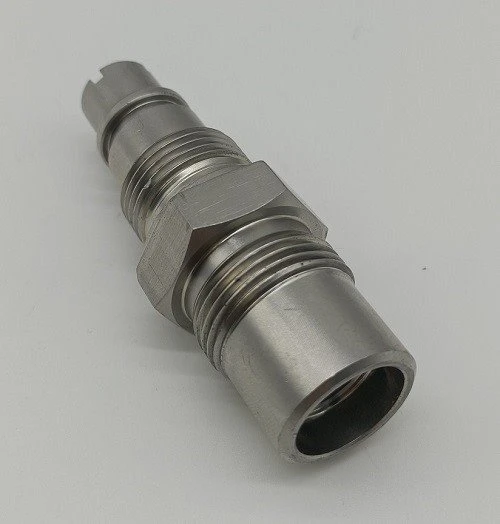

Hey there! I'm a supplier in the titanium machining biz. Titanium is a super - cool material, but machining it comes with its own set of challenges. One crucial aspect that can't be overlooked is the coolant system. In this blog, I'll dive into what the coolant system needs to be like for effective titanium machining.
First off, let's talk about why we need a coolant system in the first place when machining titanium. Titanium has a relatively low thermal conductivity. This means that when you're cutting, drilling, or milling it, a whole lot of heat gets generated at the cutting tool - workpiece interface. If this heat isn't managed properly, it can spell trouble. The high heat can cause the cutting tool to wear out really quickly, which means more frequent tool changes and higher costs. It can also lead to thermal damage to the titanium workpiece itself, affecting its mechanical properties and surface finish.
One of the key requirements for the coolant system is proper cooling capacity. The coolant needs to be able to absorb and dissipate the heat that's generated during the machining process. For titanium, due to the high heat levels, a coolant with a high specific heat capacity is ideal. Water - based coolants are often a great choice because water has a relatively high specific heat. This allows the coolant to soak up a significant amount of heat from the cutting area.
But it's not just about the coolant's cooling ability. It also needs to have good lubrication properties. When machining titanium, there's a lot of friction between the cutting tool and the workpiece. A well - lubricated coolant can reduce this friction. Less friction means less heat generation and also a smoother cutting process. This can improve the surface finish of the machined parts, which is super important, especially for applications where a high - quality finish is required. For example, in aerospace where our Titanium CNC Turning Parts are often used, a flawless surface finish can be a matter of safety and performance.
Another requirement is the ability to flush away chips. Titanium chips can be long and stringy, and if they're not removed promptly from the cutting area, they can cause all sorts of problems. They can get wrapped around the cutting tool, interfering with the cutting process and potentially causing tool breakage. The coolant system should be designed in a way that it can effectively carry these chips away from the cutting site. This might involve using a high - pressure coolant delivery system. High - pressure coolant can blast the chips off the cutting edge and into the chip conveyor, keeping the cutting area clean.
Now, let's consider the chemical compatibility of the coolant. Titanium is a reactive metal, and some coolants might react with it. This can lead to corrosion of the workpiece or changes in its surface properties. So, the coolant used in titanium machining needs to be chemically inert with respect to titanium. Before using a new coolant, it's a good idea to do some small - scale tests to make sure there are no unwanted chemical reactions.
The concentration of the coolant also matters. For a water - based coolant, if the concentration is too low, it might not provide adequate cooling and lubrication. On the other hand, if it's too high, it can lead to issues like foaming, which can reduce the effectiveness of the coolant system. Finding the right concentration is a bit of a balancing act, but it's essential for optimal performance.
In terms of the delivery system of the coolant, it should be precise. The coolant needs to reach the exact point where the cutting is happening. With modern machining techniques, such as Titanium CNC Milling Parts production, the cutting tools may be moving in complex paths. The coolant delivery system should be able to follow these paths and ensure that the coolant is constantly applied to the cutting zone. This might involve using nozzles that can be adjusted to direct the coolant flow accurately.
Maintenance of the coolant system is also a big deal. Over time, the coolant can become contaminated with chips, dirt, and other debris. This can reduce its effectiveness and even damage the coolant system components. Regular coolant filtering and checking the coolant's chemical properties are necessary. For example, monitoring the pH level of a water - based coolant is important because changes in pH can indicate issues such as contamination or coolant degradation.
Now, let me tell you a bit about us as a titanium machining supplier. We've been in the game for a while, and we understand just how crucial the right coolant system is for producing high - quality titanium parts. We use state - of - the - art coolant systems that meet all the requirements we've talked about. Our experience has taught us that getting the coolant system right can really make a difference in the efficiency and quality of the machining process.
If you're in the market for titanium machining services and you're concerned about the quality of the machining and the coolant system used, we're here for you. Whether you need Titanium CNC Turning Parts or Titanium CNC Milling Parts, we can provide top - notch products. We're always happy to have a chat about your specific requirements, so don't hesitate to reach out and start a procurement discussion.
References:
- "Machining of Titanium Alloys: Modeling, Simulation and Optimization" by Inderjeet Singh
- "Coolant Technology for Metal Machining" by various industry experts


