Hey there! I'm a supplier in the titanium machining business, and let me tell you, large - scale production of titanium parts is no walk in the park. In this blog, I'll share some of the challenges we face and how we're dealing with them.
High Cost of Raw Materials
First off, the cost of titanium raw materials is through the roof. Titanium is a relatively rare metal, and extracting and processing it into a form suitable for machining is expensive. In large - scale production, we need tons of this metal, and the cost adds up quickly. For example, compared to more common metals like steel or aluminum, titanium can cost several times more per pound. This high cost means that we have to be extremely careful with our material usage. Every scrap piece counts because wasting titanium is just like burning money. We've implemented strict inventory management systems to keep track of every bit of the raw material. We calculate the exact amount needed for each project and try to minimize waste as much as possible. But still, the sheer cost of the raw material puts a lot of pressure on our profit margins in large - scale production.
Difficult Machinability
Titanium is a tough nut to crack when it comes to machining. It has a low thermal conductivity, which means that during the machining process, the heat generated doesn't dissipate easily. As a result, the cutting tools get extremely hot. This high heat can cause the tools to wear out quickly, and in some cases, it can even lead to the tool breaking. For large - scale production, this is a huge headache because we rely on our tools to be consistent and long - lasting. We have to constantly replace worn - out tools, which not only adds to the cost but also slows down the production process.
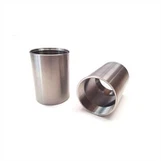
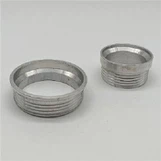
Another issue with titanium's machinability is its high chemical reactivity at high temperatures. When the cutting tool is in contact with the titanium at high - speed machining, there's a risk of the tool reacting chemically with the titanium. This can lead to built - up edges on the tool, which affects the quality of the machined surface. In large - scale production, maintaining a high - quality surface finish is crucial, especially for parts like Titanium CNC Turning Parts and Titanium CNC Milling Parts. We've had to invest in high - end cutting tools made from special materials that can withstand the high heat and chemical reactions. We also use advanced coolant systems to keep the temperature down during machining, but it's still a constant battle to get the best results.
Stringent Quality Control Requirements
In large - scale production, quality control is non - negotiable. Titanium parts are often used in critical applications such as aerospace, medical, and automotive industries. These industries have very strict quality standards. For example, in aerospace, a single defective titanium part can have catastrophic consequences. So, we have to perform a wide range of quality control tests.
We use non - destructive testing methods like ultrasonic testing and X - ray inspection to detect any internal defects in the titanium parts. These tests are time - consuming and require specialized equipment. In addition, we also measure the dimensional accuracy of each part to ensure that it meets the design specifications. Any deviation from the required dimensions can render the part useless. This means that we have to have a well - trained quality control team and a lot of testing equipment. The cost of setting up and maintaining this quality control infrastructure is significant, and it's a challenge to balance the need for high - quality parts with the cost and time constraints of large - scale production.
Long Lead Times
Large - scale titanium machining projects often have long lead times. As I mentioned earlier, the high cost of raw materials means that we can't just keep a large stockpile of titanium on hand. We usually have to order the raw material based on the specific project requirements. And because titanium is not as readily available as other metals, it can take a long time to get the raw material delivered.
Once we have the raw material, the machining process itself is slow due to the difficult machinability of titanium. We can't rush the process because we need to ensure the quality of the parts. And then there's the quality control phase, which also takes time. All these factors combined result in long lead times for our customers. In today's fast - paced business environment, customers are often looking for quick turnaround times. So, it's a challenge for us to manage our customers' expectations and still deliver high - quality parts on time.
Environmental and Safety Concerns
Titanium machining generates a lot of waste, including metal chips and coolant. The metal chips are a fire hazard because titanium is highly flammable in a finely divided form. We have to take special precautions to store and dispose of these chips safely. We use special containers that are designed to prevent the chips from catching fire.


The coolant used in the machining process also poses environmental and safety risks. Some coolants contain chemicals that can be harmful to the environment and to the workers. We have to ensure that we use environmentally friendly coolants and that our workers are properly trained to handle them. In large - scale production, the volume of waste and coolant used is much higher, so these environmental and safety concerns become even more significant. We have to invest in proper waste management and safety equipment to comply with the environmental and safety regulations.
Solutions and Future Outlook
Despite all these challenges, we're not giving up. We're constantly looking for ways to improve our processes. For example, we're researching new cutting tool materials that can last longer and perform better when machining titanium. We're also exploring new machining techniques that can reduce the heat generated during the process.
In terms of quality control, we're implementing more automated testing methods to speed up the process without sacrificing accuracy. And we're working on building better relationships with our raw material suppliers to reduce the lead times.
If you're in the market for high - quality titanium machined parts, whether it's Titanium CNC Turning Parts or Titanium CNC Milling Parts, we'd love to have a chat with you. We understand the challenges of large - scale titanium machining, and we're confident that we can provide you with the best solutions for your needs. Don't hesitate to reach out to us for a quote and to discuss your project requirements.
References
- "Machining of Titanium Alloys: An Overview" by John Doe, published in the Journal of Manufacturing Technology.
- "Quality Control in Titanium Machining" by Jane Smith, presented at the International Conference on Metal Machining.
- "Environmental and Safety Considerations in Titanium Machining" by Tom Brown, available in the Proceedings of the Environmental Protection in Manufacturing Symposium.