In the field of metal machining, titanium is a highly sought - after material due to its excellent properties such as high strength - to - weight ratio, corrosion resistance, and biocompatibility. However, machining titanium is a challenging task, and the performance of cutting tools plays a crucial role in the efficiency and quality of the machining process. As a titanium machining supplier, I have accumulated rich experience in evaluating the performance of cutting tools in titanium machining. In this blog, I will share some key aspects and methods for evaluating cutting tool performance in titanium machining.
Tool Wear
One of the most direct indicators of cutting tool performance is tool wear. In titanium machining, tool wear occurs mainly in three forms: flank wear, crater wear, and notch wear.
Flank wear is the abrasion on the relief face of the cutting tool. It is caused by the friction between the tool and the machined surface of the titanium workpiece. As flank wear progresses, the cutting force increases, which can lead to poor surface finish of the workpiece and reduced dimensional accuracy. To evaluate flank wear, we can use a microscope to measure the width of the wear land on the flank face at regular intervals during the machining process. A smaller and more stable flank wear rate indicates better tool performance.
Crater wear appears on the rake face of the cutting tool. It is mainly due to the high - temperature and high - pressure conditions generated during the chip - tool contact. Titanium has a relatively low thermal conductivity, which means that the heat generated during machining is concentrated in the cutting zone, exacerbating crater wear. We can measure the depth and diameter of the crater using a profilometer or an optical microscope. Excessive crater wear can cause the cutting edge to become weak and prone to chipping, so a tool with less crater wear is more desirable.
Notch wear occurs at the depth - of - cut line on the cutting edge. It is often related to the chemical interaction between the tool material and the titanium workpiece, as well as the stress concentration at this location. By measuring the depth of the notch, we can assess the severity of notch wear. A tool with less notch wear is more likely to maintain its cutting edge integrity and machining accuracy.

Cutting Force
Cutting force is another important parameter for evaluating cutting tool performance. During titanium machining, the cutting force is affected by many factors, including the tool geometry, cutting parameters, and tool wear.
When a cutting tool is in good condition, the cutting force is relatively stable. As the tool wears, the cutting force gradually increases. By using a dynamometer to measure the cutting force components (such as the tangential force, radial force, and axial force), we can monitor the tool's performance in real - time. A sudden increase in cutting force may indicate that the tool is experiencing excessive wear or chipping. For example, if the tangential force increases significantly, it may be a sign of flank wear or poor chip formation. On the other hand, an abnormal increase in the radial force can lead to vibration and reduced surface finish of the workpiece.
We can also analyze the relationship between the cutting force and the cutting parameters. For instance, by increasing the cutting speed or feed rate, the cutting force usually increases. However, a high - performance cutting tool should be able to maintain a relatively low cutting force even under higher cutting parameters, which means that it can achieve higher machining efficiency without excessive force requirements.
Surface Finish
The surface finish of the machined titanium workpiece is a direct reflection of the cutting tool performance. A good cutting tool should be able to produce a smooth and uniform surface on the workpiece.
We can use a surface roughness tester to measure the surface roughness of the machined titanium part. The common parameters for evaluating surface roughness include Ra (arithmetic average roughness) and Rz (ten - point height of irregularities). A lower Ra or Rz value indicates a smoother surface finish.
During machining, factors such as tool wear, cutting vibration, and chip formation can all affect the surface finish. For example, if the tool has excessive flank wear, it will leave more tool marks on the workpiece surface, resulting in a higher surface roughness. A cutting tool with good chip - breaking ability can prevent the chips from scratching the machined surface, thereby improving the surface finish.
Tool Life
Tool life is perhaps the most comprehensive indicator of cutting tool performance. It is defined as the time or the number of workpieces machined before the cutting tool reaches its end - of - life criterion. The end - of - life criterion can be based on the maximum allowable tool wear, the unacceptable surface finish of the workpiece, or the excessive cutting force.
To determine the tool life, we can conduct machining tests under specific cutting conditions. We record the machining time or the number of workpieces processed until the tool fails to meet the required performance standards. A longer tool life means that the tool can be used for a longer period without replacement, reducing the machining cost and downtime.
There are several factors that can affect tool life in titanium machining. The tool material is a critical factor. For example, carbide tools with proper coatings are widely used in titanium machining because they have good hardness and wear resistance. The coating can act as a barrier, reducing the friction and chemical interaction between the tool and the workpiece, thereby extending the tool life.
The cutting parameters also have a significant impact on tool life. Higher cutting speeds generally lead to shorter tool life due to the increased heat generation and tool wear. However, by optimizing the cutting parameters, such as choosing an appropriate combination of cutting speed, feed rate, and depth of cut, we can achieve a balance between machining efficiency and tool life.
Chip Formation
The quality of chip formation is closely related to cutting tool performance. In titanium machining, the ideal chip should be continuous and easy to break.
Continuous chips that are difficult to break can cause problems such as chip entanglement around the cutting tool and workpiece, which can damage the cutting edge and the machined surface. On the other hand, if the chips are too brittle and break into small pieces, it may indicate that the cutting force is too high or the tool geometry is not suitable.
We can observe the chip shape, size, and color to evaluate chip formation. For example, a smooth - surfaced and well - segmented chip is a sign of good chip formation. By adjusting the tool geometry, such as the rake angle and the chip breaker design, we can improve the chip formation process. A cutting tool that can produce favorable chip formation is more likely to ensure smooth machining operations and better tool performance.
Cost - effectiveness
As a titanium machining supplier, cost - effectiveness is an important consideration when evaluating cutting tool performance. While a high - performance cutting tool may have a higher initial cost, it may save money in the long run.
We need to consider the tool cost per part. This can be calculated by dividing the total cost of the cutting tool (including the purchase cost and the cost of regrinding if applicable) by the number of workpieces that can be machined with the tool. A tool with a lower tool cost per part is more cost - effective.
In addition to the direct tool cost, we also need to consider the indirect costs associated with tool performance. For example, a tool with a longer tool life reduces the frequency of tool changes, which means less downtime for the machining equipment and higher productivity. A tool that can produce better surface finish and dimensional accuracy may also reduce the need for post - machining operations, saving both time and cost.
Applications of Titanium Machined Parts
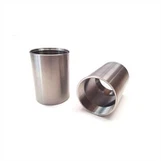
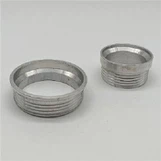
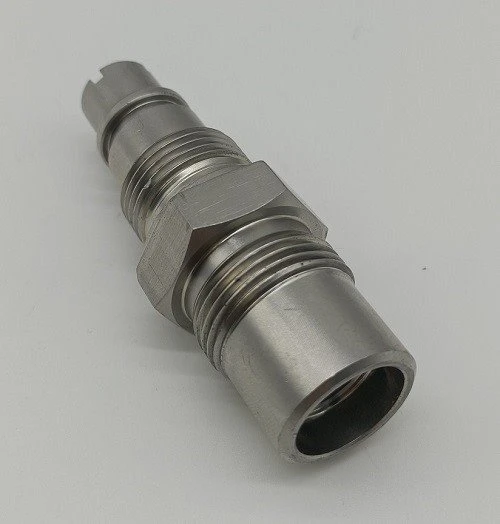
In the market, our Titanium CNC Milling Parts and Titanium CNC Turning Parts are widely used in various industries, such as aerospace, medical, and automotive. High - quality cutting tools are essential for ensuring the precision and quality of these parts.
In the aerospace industry, titanium parts need to meet strict quality and performance requirements due to the high - stress and high - temperature operating conditions. Our well - evaluated cutting tools can help us produce titanium parts with high dimensional accuracy and excellent surface finish, meeting the industry's demanding standards.
In the medical field, titanium is a popular material for implants and surgical instruments because of its biocompatibility. The use of high - performance cutting tools allows us to machine complex - shaped titanium parts with high precision, ensuring the safety and effectiveness of medical devices.
In the automotive industry, titanium parts are used in high - performance engines and other components to reduce weight and improve fuel efficiency. Our ability to evaluate and select the best cutting tools enables us to produce high - quality titanium parts that meet the automotive industry's requirements for performance and reliability.
Conclusion
Evaluating the performance of cutting tools in titanium machining is a complex but essential task. By considering factors such as tool wear, cutting force, surface finish, tool life, chip formation, and cost - effectiveness, we can select the most suitable cutting tools for our titanium machining operations.
As a titanium machining supplier, we are committed to providing high - quality titanium machined parts to our customers. We continuously improve our cutting tool evaluation methods to ensure that we use the best cutting tools in our production processes. If you are interested in our titanium machining services or have any questions about cutting tool performance in titanium machining, please feel free to contact us for further discussion and procurement negotiation.
References
- Astakhov, V. P. (2010). Metal Cutting Fundamentals. CRC Press.
- Trent, E. M., & Wright, P. K. (2000). Metal Cutting. Butterworth - Heinemann.
- Stephenson, D. A., & Agapiou, J. S. (2006). Metal Cutting Theory and Practice. CRC Press.