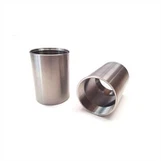
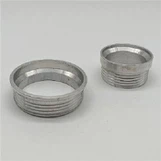
Bending tubings is a crucial process in various industries, especially in bicycle frame building. As a supplier of Tubings & Tubing Parts, I've witnessed firsthand the challenges and importance of bending tubings without causing damage. In this blog, I'll share some valuable insights and techniques to help you achieve this goal.
Understanding the Tubing Material
The first step in bending tubings without damage is to understand the material you're working with. Different materials have different properties, such as ductility, strength, and elasticity, which can significantly affect the bending process.
For instance, aluminum tubings are relatively soft and ductile, making them easier to bend compared to steel or titanium tubings. However, they are also more prone to wrinkling and collapsing during the bending process. On the other hand, steel tubings are stronger and more rigid, but they require more force to bend and are more likely to crack or break if not bent correctly.
Titanium tubings, like our Titanium Head Tubes, offer a unique combination of strength, lightness, and corrosion resistance. However, they are also more expensive and require specialized bending techniques due to their high strength and low ductility.
Choosing the Right Bending Method
There are several methods available for bending tubings, each with its own advantages and disadvantages. The choice of bending method depends on factors such as the tubing material, diameter, wall thickness, and the desired bend radius.
Mandrel Bending
Mandrel bending is a popular method for bending tubings without damage, especially for applications that require a smooth, consistent bend. In this method, a mandrel is inserted into the tubing to support the inner wall during the bending process, preventing it from collapsing or wrinkling.
Mandrel bending is commonly used in the automotive and aerospace industries, as well as in bicycle frame building. It allows for tight bend radii and precise control over the bend angle, making it ideal for creating complex shapes and curves.
Rotary Draw Bending
Rotary draw bending is another widely used method for bending tubings. In this method, the tubing is clamped between a die and a pressure die, and a bend die is rotated around the tubing to create the bend.


Rotary draw bending is suitable for a wide range of tubing materials and diameters, and it can produce bends with relatively small radii. However, it may not be as effective as mandrel bending in preventing wrinkling and collapsing, especially for thin-walled tubings.
Roll Bending
Roll bending is a simple and cost-effective method for bending large-diameter tubings. In this method, the tubing is passed through a set of rolls that gradually bend it into the desired shape.
Roll bending is commonly used in the construction and manufacturing industries for creating cylindrical and conical shapes. However, it is not suitable for creating tight bends or complex shapes, and it may cause some distortion or flattening of the tubing.
Preparing the Tubing for Bending
Proper preparation of the tubing is essential for achieving a successful bend without damage. Here are some important steps to follow:
Cleaning and Deburring
Before bending the tubing, it's important to clean it thoroughly to remove any dirt, grease, or debris that could affect the bending process. You can use a solvent or a degreaser to clean the tubing, and then dry it with a clean cloth.
Deburring the ends of the tubing is also important to prevent them from scratching or damaging the bending dies. You can use a file or a deburring tool to remove any sharp edges or burrs from the tubing.
Annealing
Annealing is a heat treatment process that can improve the ductility and formability of the tubing, making it easier to bend without cracking or breaking. This process involves heating the tubing to a specific temperature and then cooling it slowly to relieve internal stresses and improve its microstructure.
Annealing is particularly useful for bending high-strength materials such as steel and titanium. However, it should be done carefully to avoid overheating the tubing, which can cause it to lose its strength and hardness.
Controlling the Bending Process
Once the tubing is prepared, it's important to control the bending process carefully to ensure a smooth, consistent bend without damage. Here are some important factors to consider:
Bend Radius
The bend radius is the distance from the center of the bend to the inside of the tubing. It's important to choose the right bend radius for the tubing material and diameter to prevent it from collapsing or wrinkling during the bending process.
As a general rule, the minimum bend radius for a tubing should be at least three times its diameter. However, this may vary depending on the tubing material and the bending method used.
Bend Angle
The bend angle is the angle between the straight section of the tubing and the bent section. It's important to control the bend angle carefully to ensure that it meets the design requirements and that the tubing fits properly into the intended application.
The bend angle can be measured using a protractor or a digital angle gauge. It's important to make small adjustments to the bend angle as needed to ensure a precise and accurate bend.
Bending Speed
The bending speed is another important factor to consider when bending tubings. Bending the tubing too quickly can cause it to crack or break, while bending it too slowly can cause it to wrinkle or collapse.
The optimal bending speed depends on factors such as the tubing material, diameter, wall thickness, and the bending method used. It's important to experiment with different bending speeds to find the one that works best for your specific application.
Inspecting the Bent Tubing
After bending the tubing, it's important to inspect it carefully to ensure that it meets the quality standards and that there are no signs of damage or defects. Here are some important things to look for:
Wrinkling and Collapsing
Wrinkling and collapsing are common problems that can occur during the bending process, especially for thin-walled tubings. These problems can weaken the tubing and affect its performance, so it's important to inspect the bent tubing carefully for any signs of wrinkling or collapsing.
If you notice any wrinkles or collapses in the tubing, you may need to adjust the bending method or the bending parameters to prevent them from occurring in future bends.
Cracking and Fracturing
Cracking and fracturing are more serious problems that can occur if the tubing is bent too far or if the bending process is not controlled properly. These problems can cause the tubing to fail prematurely, so it's important to inspect the bent tubing carefully for any signs of cracking or fracturing.
If you notice any cracks or fractures in the tubing, it should be discarded immediately and a new tubing should be used.
Dimensional Accuracy
Dimensional accuracy is another important factor to consider when inspecting the bent tubing. The bend radius, bend angle, and overall length of the tubing should be within the specified tolerances to ensure that it fits properly into the intended application.
You can use a caliper or a micrometer to measure the dimensions of the bent tubing and compare them to the design specifications. If the dimensions are outside the specified tolerances, you may need to adjust the bending method or the bending parameters to correct the problem.
Conclusion
Bending tubings without damage is a challenging but achievable task. By understanding the tubing material, choosing the right bending method, preparing the tubing properly, controlling the bending process, and inspecting the bent tubing carefully, you can ensure a successful bend that meets the quality standards and performs as expected.
As a supplier of Tubings & Tubing Parts, we offer a wide range of high-quality tubings and tubing parts, including BB30 Press Fit Shell and Bottom Bracket Shell, to meet the needs of various industries and applications. If you have any questions or need assistance with bending tubings, please don't hesitate to contact us. We're here to help you achieve your goals and provide you with the best possible solutions.
References
- ASM Handbook, Volume 6: Welding, Brazing, and Soldering, ASM International, 1993.
- The Tube & Pipe Bending Handbook, by John H. Lindsay, Industrial Press, 2002.
- Bicycle Frame Building: Design, Construction, and Maintenance, by Richard Schwinn, McGraw-Hill, 1973.