As a supplier of CNC machining parts, I've seen firsthand how crucial the coolant flow rate is in the machining process. In this blog, I'll share my insights on how the coolant flow rate affects the machining of CNC parts.
Let's start with the basics. Coolant plays a vital role in CNC machining. It helps to reduce heat generated during the cutting process, lubricates the cutting tool and the workpiece, and flushes away chips and debris. The flow rate of the coolant determines how effectively it can perform these functions.
Heat Dissipation
One of the primary functions of coolant is to dissipate heat. During CNC machining, a significant amount of heat is generated due to the friction between the cutting tool and the workpiece. If this heat isn't managed properly, it can lead to a variety of issues.
When the coolant flow rate is too low, it can't remove heat efficiently. This causes the temperature of the cutting tool and the workpiece to rise. High temperatures can cause the cutting tool to wear out quickly, reducing its lifespan and increasing the cost of tool replacement. Moreover, excessive heat can also lead to thermal deformation of the workpiece, affecting its dimensional accuracy and surface finish.
On the other hand, if the coolant flow rate is too high, it might not stay in contact with the cutting zone long enough to absorb the heat effectively. It can also cause splashing, which not only wastes coolant but also makes the machining environment messy. So, finding the right balance is key.
Lubrication
Coolant also acts as a lubricant between the cutting tool and the workpiece. A proper coolant flow rate ensures that a sufficient amount of coolant reaches the cutting edge. This reduces friction, which in turn reduces the cutting force required. Lower cutting forces mean less wear and tear on the cutting tool and a better surface finish on the workpiece.
If the coolant flow rate is insufficient, there won't be enough lubrication. This can lead to increased friction, higher cutting forces, and a rougher surface finish on the part. In some cases, it can even cause the cutting tool to weld to the workpiece, resulting in a poor-quality part and potential damage to the tool.
Chip Removal
Another important function of coolant is to flush away chips and debris generated during machining. The flow rate of the coolant determines how well it can perform this task.
When the coolant flow rate is too low, chips may not be removed from the cutting area quickly enough. This can cause chips to accumulate around the cutting tool, leading to chip recutting. Chip recutting can damage the cutting tool and the workpiece, and it can also affect the surface finish of the part.
A high enough coolant flow rate ensures that chips are quickly and effectively removed from the cutting zone. This helps to maintain a clean cutting environment, which is essential for high-quality machining. However, as mentioned earlier, an extremely high flow rate can cause splashing and other issues, so it needs to be optimized.
Finding the Optimal Coolant Flow Rate
Finding the optimal coolant flow rate depends on several factors, including the type of material being machined, the cutting tool geometry, the machining operation (e.g., turning, milling, drilling), and the machine tool itself.
For example, when machining a hard material like stainless steel, a higher coolant flow rate may be required to dissipate the heat generated during cutting. On the other hand, when machining a softer material like aluminum, a lower flow rate might be sufficient.
Tool geometry also plays a role. Tools with a larger cutting edge may require a higher coolant flow rate to ensure proper lubrication and chip removal.
As a CNC machining parts supplier, we often work closely with our customers to determine the best coolant flow rate for their specific applications. We conduct tests and use our experience to find the optimal settings that will result in high-quality parts and efficient machining processes.
Impact on Different Types of CNC Parts
The coolant flow rate can have different impacts on various types of CNC parts. For instance, parts with complex geometries may require a more precise coolant flow rate to ensure that all areas of the part are properly cooled and lubricated.
When manufacturing Custom Lock Cylinder Parts, Lock Cylinder Accessories, Key Plug, Key Cylinder, Key Housing, which often have small and intricate features, a well - controlled coolant flow rate is essential. A low flow rate might not reach all the small cavities and corners, leading to uneven cooling and potential quality issues.
For parts used in Home Appliances Tend To Be Intelligent, such as precision components, the surface finish and dimensional accuracy are critical. The right coolant flow rate helps to achieve these high - quality standards, ensuring that the parts function properly in the final product.
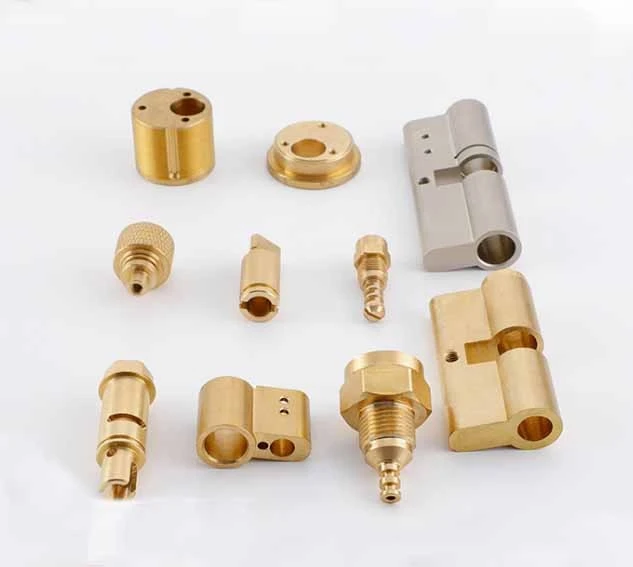

When machining Beryllium Copper Part, Beryllium Copper Machined Part, Beryllium Copper Washer, Beryllium Copper Plate, which have unique material properties, the coolant flow rate needs to be adjusted accordingly. Beryllium copper has good thermal conductivity, but it also requires proper lubrication and chip removal during machining.
Conclusion
In conclusion, the coolant flow rate is a critical factor in the machining of CNC parts. It affects heat dissipation, lubrication, and chip removal, all of which have a direct impact on the quality of the parts, the lifespan of the cutting tools, and the efficiency of the machining process.
As a supplier of CNC machining parts, we understand the importance of optimizing the coolant flow rate. We are committed to providing our customers with high - quality parts by using the latest techniques and best practices in coolant management.
If you're in the market for CNC machining parts and want to discuss how we can ensure the best machining results for your specific needs, feel free to reach out. We're here to help you get the most out of your CNC machining projects.
References
- Boothroyd, G., & Knight, W. A. (2006). Fundamentals of machining and machine tools. CRC press.
- Kalpakjian, S., & Schmid, S. R. (2010). Manufacturing engineering and technology. Pearson.