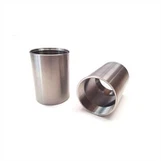
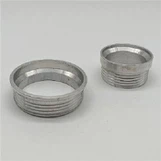
Titanium has long been celebrated in the engineering and manufacturing world for its remarkable properties, and when it comes to stem parts, its performance under high - pressure conditions is a topic of great interest. As a supplier of Titanium Stem Parts, I have witnessed firsthand the unique advantages these components offer in demanding environments.
Understanding Titanium's Inherent Properties
Titanium is renowned for its high strength - to - weight ratio. This means that even though it is relatively lightweight, it can withstand significant amounts of stress. When subjected to high - pressure conditions, this property becomes crucial. Unlike some other metals that may deform or break under extreme pressure, titanium has the ability to maintain its structural integrity.
The corrosion resistance of titanium is another factor that contributes to its performance under high - pressure situations. In high - pressure environments, there is often an increased risk of corrosion due to factors such as the presence of moisture or chemicals. Titanium's natural oxide layer acts as a protective barrier, preventing corrosion from occurring. This is especially important for stem parts, as any corrosion could compromise their strength and functionality over time.
High - Pressure Testing of Titanium Stem Parts
To accurately assess how titanium stem parts perform under high - pressure conditions, we conduct a series of rigorous tests. These tests simulate real - world scenarios where the stem parts may be exposed to extreme pressures.
One of the key tests involves applying a gradually increasing pressure to the stem part until it reaches its maximum load - bearing capacity. During this process, we closely monitor the deformation of the part. Titanium stem parts typically show minimal deformation even at high pressures. This is in contrast to stem parts made from other materials, which may start to bend or crack at much lower pressure levels.
Another important aspect of the testing is to evaluate the fatigue resistance of the titanium stem parts. High - pressure conditions often involve repeated loading and unloading cycles. Over time, this can lead to fatigue failure in materials that are not adequately resistant. Our tests have shown that titanium stem parts can withstand a large number of these cycles without significant degradation. This is due to the unique crystalline structure of titanium, which allows it to absorb and distribute stress effectively.
Applications in High - Pressure Environments
Titanium stem parts have a wide range of applications in high - pressure environments. In the aerospace industry, for example, these parts are used in aircraft landing gear systems. The landing gear is subjected to extremely high pressures during takeoff and landing, and titanium stem parts can ensure the reliable operation of these critical components.
In the automotive racing industry, titanium stem parts are also highly sought after. The high - speed and high - performance nature of racing cars means that the steering and suspension systems are under constant high - pressure conditions. Titanium stem parts can provide the necessary strength and durability to withstand these stresses, improving the overall performance and safety of the vehicle.
For cyclists, Bike Stem Riser Bike Fork Stem Extender Bicycle Handlebar Raiser Head Up Adapter Suitable For Mountain Bike, Road Bike, MTB, BMX, Fixie (Aluminium Alloy, Adjustable) is an example of a product that can benefit from the properties of titanium. Although the pressure levels in cycling are not as extreme as in aerospace or automotive racing, the consistent forces during cycling, especially on rough terrains, can still challenge the stem parts. Titanium stem parts offer a lightweight yet strong option for cyclists, enhancing their riding experience.
Comparison with Other Materials
When compared to other materials commonly used for stem parts, such as aluminum and steel, titanium stands out in high - pressure conditions. Aluminum is lightweight, but it has a relatively low strength compared to titanium. In high - pressure situations, aluminum stem parts are more likely to deform or break.
Steel, on the other hand, is strong but heavy. The additional weight can be a disadvantage in applications where weight is a critical factor, such as in aerospace and cycling. Titanium offers the best of both worlds - high strength and low weight, making it an ideal choice for stem parts in high - pressure environments.
The Role of Manufacturing Processes
The performance of titanium stem parts under high - pressure conditions is also influenced by the manufacturing processes used. At our company, we use advanced manufacturing techniques to ensure the highest quality of our Titanium Stem Parts.
Precision machining is used to create stem parts with accurate dimensions and smooth surfaces. This not only improves the fit and functionality of the parts but also reduces stress concentrations, which can lead to premature failure under high - pressure conditions. Heat treatment is another important process. By carefully controlling the heat treatment parameters, we can optimize the mechanical properties of the titanium, further enhancing its performance under high pressures.
Future Developments in Titanium Stem Parts
As technology continues to advance, we can expect further improvements in the performance of titanium stem parts under high - pressure conditions. New alloying techniques may be developed to enhance the strength and corrosion resistance of titanium even further.
In addition, advancements in manufacturing processes may lead to more complex and efficient designs of stem parts. These designs could better distribute stress and reduce the overall weight of the parts, while still maintaining or improving their performance under high pressures.
Contact for Procurement and Collaboration
If you are interested in learning more about our Titanium Stem Parts and how they can meet your high - pressure application needs, we encourage you to reach out to us. Our team of experts is ready to discuss your specific requirements and provide you with detailed information about our products. Whether you are in the aerospace, automotive, or cycling industry, we have the experience and expertise to offer you the best titanium stem parts solutions.


References
- "Titanium: A Technical Guide" by John R. Davis
- "Materials Science and Engineering: An Introduction" by William D. Callister Jr. and David G. Rethwisch
- Industry reports on high - pressure testing of engineering materials