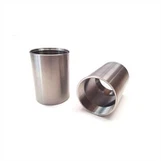
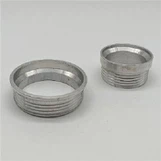
In the realm of bicycle component manufacturing, the performance of parts under various environmental conditions is a crucial consideration. As a supplier of Titanium Stem Parts, I've witnessed firsthand the unique properties of titanium and how they play out in low - temperature environments. Understanding these performances is essential for cyclists, especially those who venture into cold - weather terrains.
Properties of Titanium Relevant to Low - Temperature Performance
Titanium is a remarkable metal known for its high strength - to - weight ratio, corrosion resistance, and biocompatibility. When it comes to low - temperature environments, some of its key properties come into sharp focus.
One of the most significant characteristics of titanium is its low thermal expansion coefficient. Unlike many other metals, titanium does not expand or contract significantly with temperature changes. In low - temperature conditions, where most metals would shrink, potentially leading to loosening of connections or structural integrity issues, titanium maintains its shape and dimensions with remarkable stability. This stability is crucial for stem parts, as any change in the stem's shape or size could affect the bike's handling and safety.
Titanium also has excellent toughness at low temperatures. Toughness refers to a material's ability to absorb energy and deform plastically before fracturing. At low temperatures, many metals become brittle and more prone to cracking. However, titanium retains its toughness, which means that the stem parts can withstand impacts and stresses without breaking. This is particularly important for cyclists riding in cold, icy, or snowy conditions, where the risk of hitting potholes, rocks, or other obstacles is higher.
Testing Titanium Stem Parts in Low - Temperature Environments
To ensure the quality and performance of our Titanium Stem Parts, we conduct a series of rigorous tests in low - temperature environments. These tests simulate the real - world conditions that cyclists may encounter.
One of the primary tests is the cold - shock test. In this test, the stem parts are placed in a chamber where the temperature is rapidly lowered to extremely cold levels, similar to those found in polar regions or high - altitude winter climates. The parts are then subjected to mechanical stresses, such as bending and torsion, to evaluate their ability to withstand sudden temperature changes and external forces. Our titanium stem parts have consistently passed these tests, demonstrating their resilience and reliability.
We also perform long - term cold - storage tests. The stem parts are stored in a cold environment for an extended period, typically several weeks or months. During this time, we monitor any changes in the material's properties, such as hardness, strength, and dimensional stability. After the storage period, the parts are tested again to ensure that they still meet our high - quality standards. These tests have shown that titanium stem parts can maintain their performance even after prolonged exposure to low temperatures.
Advantages of Titanium Stem Parts in Low - Temperature Cycling
For cyclists who brave the cold, titanium stem parts offer several distinct advantages.
First, the stability of titanium in low - temperature environments means that the bike's handling remains consistent. The stem is a critical component that connects the handlebars to the fork, and any change in its shape or size can affect the bike's steering precision. With titanium stem parts, cyclists can trust that their bikes will respond predictably, even in freezing conditions.
Second, the toughness of titanium provides an extra layer of safety. In cold weather, the ground may be more uneven, and the risk of accidents is higher. A titanium stem can absorb the impact of a crash or a hard landing better than a stem made of a more brittle material, reducing the likelihood of the stem breaking and potentially causing serious injury to the cyclist.
Third, the corrosion resistance of titanium is a significant benefit in low - temperature environments. Cold weather often means the presence of snow, ice, and road salt, which can accelerate the corrosion of metal parts. Titanium stem parts are highly resistant to corrosion, which means they will last longer and require less maintenance compared to stems made of other metals.
Comparing Titanium with Other Materials
When it comes to low - temperature performance, titanium outperforms many other materials commonly used in bike stem manufacturing.
Aluminum is a popular choice for bike stems due to its light weight and relatively low cost. However, aluminum has a higher thermal expansion coefficient than titanium, which means it is more likely to expand and contract with temperature changes. In low - temperature environments, this can lead to loosening of the stem's connections and affect the bike's handling. Additionally, aluminum becomes more brittle at low temperatures, increasing the risk of cracking.
Steel is another material used in bike stem manufacturing. While steel is strong, it is also heavy, which can be a disadvantage for cyclists looking for a lightweight bike. Steel is also prone to corrosion, especially in the presence of moisture and salt, which are common in cold - weather conditions. Titanium, on the other hand, offers a better balance of strength, weight, and corrosion resistance, making it a superior choice for low - temperature cycling.
Real - World Experiences of Cyclists Using Titanium Stem Parts
We've received numerous feedback from cyclists who have used our Titanium Stem Parts in low - temperature environments. Many cyclists have reported that the bikes with titanium stem parts handle better in cold weather compared to bikes with stems made of other materials. They have noticed that the steering is more precise, and the bike feels more stable, even on icy or uneven roads.
Some cyclists have also shared stories of how the toughness of the titanium stem saved them from potential accidents. In one instance, a cyclist hit a large pothole on a frozen road. The impact was significant, but the titanium stem absorbed the shock and did not break, allowing the cyclist to continue riding safely.
The Role of Design in Low - Temperature Performance
In addition to the material properties, the design of the titanium stem parts also plays a crucial role in their low - temperature performance. Our engineers pay close attention to the design details to ensure that the stem parts can withstand the unique challenges of cold - weather cycling.


The shape of the stem is carefully optimized to distribute stress evenly. This helps to prevent stress concentrations that could lead to cracking, especially at low temperatures. We also use advanced manufacturing techniques to ensure that the stem has a uniform structure, which further enhances its performance and reliability.
The connection points between the stem and the handlebars and fork are also designed to be secure and stable. We use high - quality fasteners and precision machining to ensure that the connections remain tight, even in the face of temperature changes and vibrations.
Accessories and Compatibility
When it comes to low - temperature cycling, cyclists may also be interested in accessories that can enhance the performance of their titanium stem parts. One such accessory is the Bike Stem Riser Bike Fork Stem Extender Bicycle Handlebar Raiser Head Up Adapter Suitable For Mountain Bike, Road Bike, MTB, BMX, Fixie (Aluminium Alloy, Adjustable). This extender can be used to adjust the height of the handlebars, providing a more comfortable riding position, especially in cold weather when cyclists may want to sit more upright to stay warm.
Our titanium stem parts are designed to be compatible with a wide range of accessories, including the stem extender. This means that cyclists can customize their bikes to suit their specific needs and preferences, without sacrificing the performance and reliability of the stem.
Conclusion
In conclusion, titanium stem parts offer exceptional performance in low - temperature environments. Their stability, toughness, and corrosion resistance make them an ideal choice for cyclists who ride in cold, icy, or snowy conditions. Through rigorous testing and careful design, we ensure that our Titanium Stem Parts meet the highest quality standards and provide cyclists with a safe and reliable riding experience.
If you're a cyclist looking for high - performance stem parts for your cold - weather rides, or if you're a bike manufacturer interested in sourcing top - quality titanium stem parts, we invite you to contact us for a procurement discussion. We're committed to providing the best products and services to meet your needs.
References
- Callister, W. D., & Rethwisch, D. G. (2017). Materials Science and Engineering: An Introduction. Wiley.
- ASM Handbook Committee. (2000). ASM Handbook, Volume 2: Properties and Selection: Nonferrous Alloys and Special - Purpose Materials. ASM International.