As a supplier of Titanium Fasteners, I've witnessed firsthand the remarkable performance of these components across a wide range of environments. One particular area that often sparks interest is how titanium fasteners perform in cold - temperature environments. In this blog, I'll delve into the science behind titanium's behavior in the cold, its benefits, and why it stands out as a top choice for various applications in low - temperature settings.
Understanding Titanium's Properties
Titanium is a metal known for its exceptional strength - to - weight ratio, corrosion resistance, and biocompatibility. When it comes to cold - temperature performance, its atomic structure plays a crucial role. Titanium has a hexagonal close - packed (HCP) crystal structure at room temperature. As the temperature drops, this structure remains relatively stable compared to other metals.
One of the key factors contributing to titanium's performance in cold environments is its low coefficient of thermal expansion. This means that as the temperature decreases, titanium fasteners do not contract as much as some other metals. For example, steel has a significantly higher coefficient of thermal expansion. In a cold - temperature environment, a steel fastener may contract more, leading to issues such as loosening or cracking in the joined materials. Titanium, on the other hand, maintains a more consistent size, ensuring a secure and reliable connection.
Advantages of Titanium Fasteners in Cold Temperatures
1. High Strength Retention
Titanium retains its strength even at extremely low temperatures. In fact, some titanium alloys can exhibit increased strength as the temperature drops. This is in contrast to many other metals, which may become brittle and lose their load - bearing capacity in cold conditions. For applications such as aerospace and cryogenic storage, where components need to withstand high stresses in cold environments, titanium fasteners provide a reliable solution.
2. Corrosion Resistance
Cold environments often come with moisture, snow, or ice, which can lead to corrosion if the right materials are not used. Titanium has a natural oxide layer on its surface that protects it from corrosion. This oxide layer is stable in cold temperatures and does not break down easily. As a result, titanium fasteners can resist rust and other forms of corrosion, even when exposed to harsh winter conditions. This is especially important for outdoor applications like bridges, outdoor machinery, and marine equipment.
3. Fatigue Resistance
In cold - temperature environments, components are often subjected to cyclic loading due to factors such as temperature fluctuations and mechanical vibrations. Titanium fasteners have excellent fatigue resistance, which means they can withstand repeated loading without failing. This property is crucial for applications where the fasteners are in constant use, such as in automotive engines or in the moving parts of industrial equipment.
Applications of Titanium Fasteners in Cold - Temperature Environments
1. Aerospace
The aerospace industry operates in a wide range of temperatures, including extremely cold conditions at high altitudes. Titanium fasteners are used in aircraft structures to ensure reliable connections between various components. They can withstand the low temperatures and high stresses experienced during flight, contributing to the overall safety and performance of the aircraft.
2. Cryogenic Storage
Cryogenic storage facilities, which store substances at very low temperatures, rely on titanium fasteners. These fasteners can maintain their integrity in the frigid environment, preventing leaks and ensuring the safe storage of liquefied gases such as nitrogen, oxygen, and hydrogen.
3. Outdoor Infrastructure
Bridges, towers, and other outdoor infrastructure are exposed to cold winter conditions. Titanium fasteners are used to connect structural elements, providing a long - lasting and corrosion - resistant solution. Their ability to maintain a secure connection in cold temperatures helps to ensure the stability and safety of these structures.

Our Titanium Fasteners Offerings
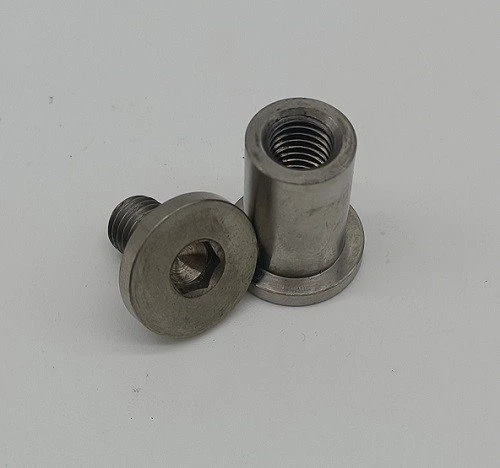
As a supplier, we offer a wide range of Titanium Fasteners suitable for cold - temperature applications. Our fasteners are made from high - quality titanium alloys that have been carefully selected for their performance in low - temperature environments. We have different types of fasteners, including bolts, nuts, screws, and washers, all designed to meet the specific requirements of our customers.
In addition to our standard fasteners, we also provide custom - made solutions. If you have a unique application that requires a specific size, shape, or strength of titanium fasteners, our team of experts can work with you to develop the perfect solution.
We also offer Other Titanium Bicycle Frame Parts for those in the bicycle industry. Even in cold - weather cycling, titanium parts can provide reliable performance, ensuring a smooth and safe ride.
Factors to Consider When Using Titanium Fasteners in Cold Environments
While titanium fasteners offer many advantages in cold - temperature environments, there are still some factors to consider.
1. Installation Torque
The installation torque of titanium fasteners may need to be adjusted in cold temperatures. Due to the lower thermal expansion, the fasteners may require a different torque value to achieve the proper pre - load. It's important to follow the manufacturer's guidelines and use the correct torque - tightening procedures to ensure a secure connection.
2. Compatibility with Other Materials
When using titanium fasteners in a cold - temperature application, it's essential to consider their compatibility with other materials. Some metals may have different coefficients of thermal expansion, which can lead to differential contraction and potential issues. It's important to choose materials that are compatible with titanium to avoid problems such as galvanic corrosion or mechanical stress.
Conclusion
Titanium fasteners are an excellent choice for cold - temperature environments. Their unique properties, including high strength retention, corrosion resistance, and fatigue resistance, make them suitable for a wide range of applications in the aerospace, cryogenic, and outdoor infrastructure industries. As a supplier, we are committed to providing high - quality titanium fasteners that meet the needs of our customers in these challenging environments.
If you are interested in purchasing titanium fasteners for your cold - temperature applications, we invite you to contact us for a detailed discussion. Our team of experts is ready to assist you in selecting the right fasteners for your specific requirements. Whether you need standard products or custom - made solutions, we have the expertise and resources to meet your needs.
References
- ASM Handbook, Volume 2: Properties and Selection: Nonferrous Alloys and Special - Purpose Materials.
- "Titanium Alloys: Physical Metallurgy and Processing" by David Eylon.
- Research papers on the performance of titanium in cold environments from leading metallurgical journals.