

In the demanding environment of aerospace engine applications, the performance of components is of utmost importance. Titanium fasteners have emerged as a crucial element in ensuring the reliability and efficiency of aerospace engines. As a titanium fasteners supplier, I have witnessed firsthand the exceptional properties and performance that these fasteners bring to this high - stakes industry.
Properties of Titanium Fasteners
Titanium is a remarkable metal known for its unique combination of properties. First and foremost, titanium has an excellent strength - to - weight ratio. In aerospace applications, where every ounce matters, this property is invaluable. A titanium fastener can provide the same level of strength as a steel fastener but at a significantly lower weight. This weight reduction translates into fuel savings and increased payload capacity for aircraft.
Another key property of titanium is its high corrosion resistance. Aerospace engines operate in harsh environments, exposed to a variety of chemicals, moisture, and high - temperature gases. Titanium fasteners can withstand these corrosive elements without significant degradation. Unlike steel fasteners, which can rust and weaken over time, titanium fasteners maintain their structural integrity, ensuring long - term reliability.
Titanium also has good fatigue resistance. Aerospace engines are subject to repeated stress cycles during operation. Fatigue failure can be a major concern, as it can lead to catastrophic engine malfunctions. Titanium fasteners are able to endure these cyclic stresses, reducing the risk of fatigue - related failures.
Performance in High - Temperature Environments
Aerospace engines generate extremely high temperatures during operation. Titanium fasteners are well - suited to these high - temperature conditions. Titanium has a relatively high melting point, which allows it to maintain its mechanical properties at elevated temperatures.
However, it's important to note that titanium can react with oxygen and nitrogen at high temperatures. To mitigate this issue, special coatings and surface treatments are often applied to titanium fasteners. These treatments form a protective layer that prevents the reaction between titanium and the surrounding atmosphere, ensuring that the fasteners perform optimally even in the intense heat of an aerospace engine.
In addition to maintaining strength, titanium fasteners also have low thermal expansion coefficients. This means that they expand and contract less than many other materials when exposed to temperature changes. In an aerospace engine, where precise fit and alignment are critical, the low thermal expansion of titanium fasteners helps to maintain the integrity of the engine components and reduces the risk of loosening or misalignment due to temperature variations.
Compatibility with Other Materials
Aerospace engines are complex assemblies made up of a variety of materials, including different metals, composites, and ceramics. Titanium fasteners are generally compatible with many of these materials.
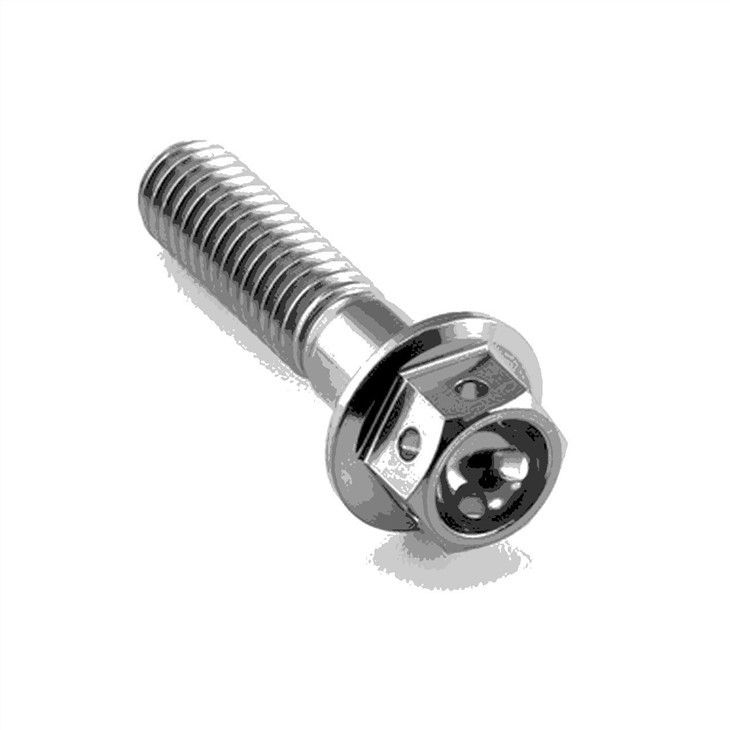

When it comes to metal - to - metal contact, titanium has a relatively low galvanic corrosion potential when paired with other common aerospace metals such as aluminum and stainless steel. This reduces the risk of galvanic corrosion, which can cause damage to the fasteners and the surrounding components.
In the case of composite materials, titanium fasteners offer a good solution for joining. Composites are increasingly being used in aerospace engines due to their high strength - to - weight ratio. Titanium fasteners can be used to securely attach composite components without causing damage to the composite material, thanks to their relatively low hardness and good clamping force distribution.
Manufacturing and Quality Control
As a titanium fasteners supplier, we understand the importance of high - quality manufacturing processes. The production of titanium fasteners for aerospace engine applications requires strict adherence to industry standards and specifications.
We use advanced manufacturing techniques such as precision machining and forging to ensure the dimensional accuracy and structural integrity of our fasteners. Each fastener undergoes a series of quality control checks, including non - destructive testing methods such as ultrasonic testing and magnetic particle inspection. These tests help to detect any internal flaws or surface defects that could compromise the performance of the fasteners.
We also conduct mechanical testing to verify the strength, hardness, and other mechanical properties of the fasteners. This includes tensile testing, shear testing, and fatigue testing. By ensuring that our fasteners meet or exceed the required standards, we can provide our customers with reliable products that will perform well in aerospace engine applications.
Applications in Different Parts of Aerospace Engines
Titanium fasteners are used in various parts of aerospace engines. In the compressor section, where air is compressed before entering the combustion chamber, titanium fasteners are used to secure the compressor blades and other components. The high strength - to - weight ratio of titanium helps to reduce the overall weight of the compressor, improving the engine's efficiency.
In the combustion chamber, where the fuel is burned to generate power, titanium fasteners are used to hold together the chamber walls and other components. The high - temperature resistance and corrosion resistance of titanium make it an ideal choice for this harsh environment.
In the turbine section, where the hot gases are expanded to drive the engine, titanium fasteners are used to attach the turbine blades and other rotating components. The fatigue resistance of titanium is crucial in this section, as the turbine blades are subject to high - speed rotation and cyclic stresses.
Future Outlook
The demand for titanium fasteners in aerospace engine applications is expected to grow in the coming years. As the aerospace industry continues to focus on improving fuel efficiency, reducing emissions, and increasing the performance of engines, the unique properties of titanium fasteners will become even more valuable.
Research and development efforts are also underway to further enhance the performance of titanium fasteners. This includes the development of new alloys, improved coatings, and more advanced manufacturing processes. These advancements will likely lead to even better - performing titanium fasteners that can meet the increasingly demanding requirements of the aerospace industry.
Conclusion
In conclusion, titanium fasteners play a vital role in aerospace engine applications. Their exceptional properties, such as high strength - to - weight ratio, corrosion resistance, fatigue resistance, and high - temperature performance, make them an ideal choice for use in these complex and demanding engines.
As a titanium fasteners supplier, we are committed to providing high - quality products that meet the strict requirements of the aerospace industry. If you are in the aerospace industry and are looking for reliable titanium fasteners for your engine applications, we would be more than happy to discuss your needs and provide you with the best solutions. You can explore our Titanium Fasteners and Other Titanium Bicycle Frame Parts on our website. Contact us to start a procurement discussion and find out how our titanium fasteners can enhance the performance of your aerospace engines.
References
-ASM Handbook, Volume 2: Properties and Selection: Nonferrous Alloys and Special - Purpose Materials. ASM International.
- "Aerospace Materials and Processes Handbook". Society of Automotive Engineers (SAE).
- "Titanium: A Technical Guide". J. R. Davis, ASM International.


