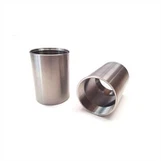
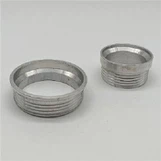
As a supplier of Titanium Head Tubes, ensuring the quality and defect - free nature of our products is of utmost importance. In this blog, I will share the comprehensive process I use to check for defects in a titanium head tube.
Visual Inspection
The first step in the defect - checking process is a thorough visual inspection. This is a basic yet crucial step that can identify many surface - level issues. When a titanium head tube arrives at our facility or during the manufacturing process, I start by examining it under good lighting conditions.
I look for any obvious scratches, dents, or cracks on the surface of the tube. Scratches can be a sign of rough handling during transportation or improper manufacturing processes. Even small scratches can potentially weaken the tube over time, especially when the head tube is under stress during the bike's operation. Dents are another concern as they can affect the structural integrity of the tube. A dented head tube may not fit properly with other bike components, such as the Head Tube Cups, which are essential for the smooth operation of the bike's steering system.
Cracks are the most serious defect that can be detected visually. Cracks can propagate under stress, leading to a catastrophic failure of the head tube. I pay close attention to areas where the tube has been welded or where there are any sharp bends. These areas are more prone to cracking due to the stress concentration.
Dimensional Inspection
After the visual inspection, I move on to the dimensional inspection. The dimensions of a titanium head tube are critical for its proper fit and function in a bicycle frame. I use precision measuring tools such as calipers and micrometers to measure the outer diameter, inner diameter, and wall thickness of the tube.
The outer diameter of the head tube must match the specifications precisely to ensure a proper fit with the BB30 Press Fit Shell and other frame components. Any deviation from the specified outer diameter can lead to a loose or tight fit, which can affect the overall stability and performance of the bike.
The inner diameter is also important, especially when considering the installation of the headset bearings. If the inner diameter is too small, the bearings may not fit properly, causing excessive friction and premature wear. On the other hand, if the inner diameter is too large, the bearings may not be held securely, leading to play in the steering system.
The wall thickness of the titanium head tube is another key dimension. A consistent wall thickness is necessary to ensure uniform strength throughout the tube. Variations in wall thickness can create weak points in the tube, increasing the risk of failure under stress.
Non - Destructive Testing (NDT)
In addition to visual and dimensional inspections, I also use non - destructive testing methods to detect internal defects in the titanium head tube. One of the most commonly used NDT methods is ultrasonic testing.
Ultrasonic testing involves sending high - frequency sound waves into the titanium tube. These sound waves travel through the material and are reflected back when they encounter a defect, such as a crack or a void. By analyzing the reflected waves, I can determine the location, size, and nature of the defect.
Another NDT method I use is magnetic particle testing. This method is suitable for detecting surface and near - surface defects in ferromagnetic materials. Although titanium is not ferromagnetic, in some cases where there are magnetic inclusions or surface irregularities, magnetic particle testing can provide valuable information.
Material Analysis
To ensure the quality of the titanium used in the head tube, I conduct material analysis. I use techniques such as X - ray fluorescence (XRF) to determine the chemical composition of the titanium. The chemical composition of titanium is critical as it affects the mechanical properties of the tube, such as strength, ductility, and corrosion resistance.
For example, our Titainium Gr9 Seamless Tubing has a specific chemical composition that provides a good balance of strength and ductility. By verifying the chemical composition, I can ensure that the head tube is made from the correct grade of titanium and that it meets the required quality standards.
Stress Testing
Stress testing is an important part of the defect - checking process. I subject the titanium head tube to simulated real - world stresses to ensure its durability and reliability. One common stress test is the bending test. In this test, the head tube is fixed at one end and a load is applied at the other end to create a bending moment.
The bending test helps to identify any weak points in the tube that may not be detected by other inspection methods. If the tube fails during the bending test, it indicates that there are internal defects or improper material properties that need to be addressed.
Another stress test is the fatigue test. In the fatigue test, the head tube is subjected to repeated loading and unloading cycles to simulate the long - term use of the bike. Fatigue testing can reveal any potential fatigue cracks that may develop over time, which are a major concern for the safety of the bike.
Documentation and Traceability
Throughout the defect - checking process, I maintain detailed documentation. This documentation includes the results of all inspections, tests, and analyses. It also includes information about the raw materials used, the manufacturing process, and the date of production.
Documentation is important for several reasons. First, it provides a record of the quality control measures taken, which can be useful for internal quality management and for meeting customer requirements. Second, it allows for traceability. In the event of a quality issue, I can trace the problem back to its source, whether it is a defective raw material, a manufacturing error, or an issue with the inspection process.


Conclusion
Checking for defects in a titanium head tube is a multi - step process that requires a combination of visual inspection, dimensional measurement, non - destructive testing, material analysis, and stress testing. By following these rigorous procedures, I can ensure that the titanium head tubes I supply are of the highest quality and free from defects.
If you are in the market for high - quality titanium head tubes, I invite you to contact me for further discussion and to explore potential business opportunities. We are committed to providing the best products and services to our customers, and I look forward to working with you to meet your specific needs.
References
- ASM Handbook Volume 11: Failure Analysis and Prevention
- Bicycle Frame Building Manuals
- Standards and Guidelines for Titanium Tubing in Bicycle Manufacturing