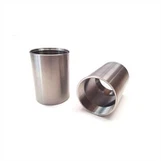
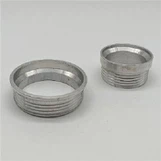
Can titanium fasteners be welded? This is a question that often comes up in various industries, especially in fields where titanium components are extensively used, such as aerospace, automotive, and bicycle manufacturing. As a supplier of Titanium Fasteners, I've had numerous discussions with clients regarding the weldability of these fasteners. In this blog, I'll delve into the science behind welding titanium fasteners, the challenges involved, and the best practices to ensure successful welding.
Understanding Titanium Fasteners
Titanium is a remarkable metal known for its high strength-to-weight ratio, excellent corrosion resistance, and biocompatibility. These properties make it an ideal choice for applications where lightweight yet durable components are required. Titanium fasteners, including bolts, nuts, and screws, are commonly used in critical assemblies where reliability and performance are paramount.
However, welding titanium is not as straightforward as welding other metals like steel or aluminum. Titanium has a high affinity for oxygen, nitrogen, and hydrogen at elevated temperatures, which can lead to the formation of brittle compounds and porosity in the weld. These issues can significantly compromise the mechanical properties of the welded joint, reducing its strength and ductility.
Weldability of Titanium Fasteners
The weldability of titanium fasteners depends on several factors, including the grade of titanium, the welding process used, and the welding conditions. There are several grades of titanium available, each with its own unique properties and applications. The most common grades used in fastener manufacturing are Grade 2 and Grade 5 (Ti-6Al-4V).
- Grade 2 Titanium: This is a commercially pure titanium grade that offers excellent corrosion resistance and good weldability. It is relatively easy to weld using common welding processes such as gas tungsten arc welding (GTAW) and gas metal arc welding (GMAW). However, proper shielding gas is essential to prevent oxidation and contamination of the weld.
- Grade 5 Titanium (Ti-6Al-4V): This is an alloy of titanium that contains 6% aluminum and 4% vanadium. It is stronger and more heat-resistant than Grade 2 titanium, but it is also more difficult to weld. The presence of aluminum and vanadium can cause issues such as cracking and porosity in the weld if the welding process is not carefully controlled.
Welding Processes for Titanium Fasteners
There are several welding processes that can be used to weld titanium fasteners, each with its own advantages and disadvantages. The most commonly used welding processes for titanium include:
- Gas Tungsten Arc Welding (GTAW): Also known as TIG welding, GTAW is a popular welding process for titanium because it provides precise control over the welding arc and produces high-quality welds. In GTAW, a non-consumable tungsten electrode is used to create an arc between the electrode and the workpiece. A shielding gas, typically argon or a mixture of argon and helium, is used to protect the weld from oxidation and contamination.
- Gas Metal Arc Welding (GMAW): Also known as MIG welding, GMAW is a faster welding process than GTAW but is generally considered less suitable for titanium because it can be more difficult to control the heat input and prevent oxidation. In GMAW, a consumable wire electrode is fed through a welding gun and melted to form the weld. A shielding gas, typically argon or a mixture of argon and carbon dioxide, is used to protect the weld from oxidation and contamination.
- Laser Beam Welding (LBW): LBW is a high-energy welding process that uses a laser beam to melt and join the workpiece. It offers several advantages over traditional welding processes, including high welding speed, minimal heat input, and excellent weld quality. However, LBW equipment is expensive and requires specialized training to operate.
Challenges in Welding Titanium Fasteners
Welding titanium fasteners presents several challenges that must be addressed to ensure successful welding. Some of the key challenges include:
- Oxidation and Contamination: Titanium has a high affinity for oxygen, nitrogen, and hydrogen at elevated temperatures, which can lead to the formation of brittle compounds and porosity in the weld. To prevent oxidation and contamination, it is essential to use a shielding gas to protect the weld from the atmosphere. The shielding gas should be pure and free of contaminants, and the welding area should be kept clean and dry.
- Heat Input: Titanium has a relatively low thermal conductivity, which means that it can retain heat for a longer time than other metals. This can lead to overheating and distortion of the fastener if the heat input is not carefully controlled. To minimize heat input, it is important to use a welding process that provides precise control over the welding parameters, such as GTAW or LBW.
- Cracking: Titanium is prone to cracking during welding, especially in the heat-affected zone (HAZ). Cracking can be caused by several factors, including high residual stresses, improper welding parameters, and the presence of impurities in the titanium. To prevent cracking, it is important to use a preheating and post-weld heat treatment to relieve residual stresses and improve the ductility of the weld.
Best Practices for Welding Titanium Fasteners
To ensure successful welding of titanium fasteners, it is important to follow some best practices. These include:
- Cleaning and Preparation: Before welding, the fasteners should be thoroughly cleaned to remove any dirt, oil, or contaminants. The welding area should be degreased using a suitable solvent, and the fasteners should be wire-brushed to remove any oxide layer.
- Shielding Gas: A high-quality shielding gas, such as pure argon or a mixture of argon and helium, should be used to protect the weld from oxidation and contamination. The shielding gas should be flowing continuously during the welding process, and the flow rate should be adjusted according to the welding parameters.
- Welding Parameters: The welding parameters, such as current, voltage, and travel speed, should be carefully selected to ensure proper fusion and minimize heat input. The welding parameters should be based on the grade of titanium, the thickness of the fastener, and the welding process used.
- Preheating and Post-Weld Heat Treatment: Preheating the fasteners before welding can help to reduce the risk of cracking and improve the weld quality. Post-weld heat treatment can also be used to relieve residual stresses and improve the ductility of the weld. The preheating and post-weld heat treatment parameters should be based on the grade of titanium and the welding process used.
Applications of Welded Titanium Fasteners
Welded titanium fasteners are used in a wide range of applications, including:


- Aerospace Industry: Titanium fasteners are widely used in the aerospace industry due to their high strength-to-weight ratio and excellent corrosion resistance. Welded titanium fasteners are used in critical assemblies such as aircraft frames, engines, and landing gear.
- Automotive Industry: Titanium fasteners are also used in the automotive industry, especially in high-performance vehicles. Welded titanium fasteners are used in applications such as engine components, suspension systems, and exhaust systems.
- Bicycle Manufacturing: Titanium is a popular material for bicycle frames and components due to its lightweight and durable properties. Welded titanium fasteners are used in bicycle frame building to join various components together. For more information on Other Titanium Bicycle Frame Parts, you can visit our website.
Conclusion
In conclusion, titanium fasteners can be welded, but it requires careful consideration of the grade of titanium, the welding process used, and the welding conditions. By understanding the challenges involved in welding titanium fasteners and following best practices, it is possible to achieve high-quality welds that meet the requirements of various applications.
As a supplier of Titanium Fasteners, we have extensive experience in providing high-quality titanium fasteners and technical support to our customers. If you have any questions or need assistance with welding titanium fasteners, please feel free to contact us. We look forward to discussing your specific requirements and helping you find the best solutions for your application.
References
- "Welding of Titanium and Titanium Alloys" by The Welding Institute
- "Titanium: A Technical Guide" by ASM International