Precision mechanical parts processing surface treatment process
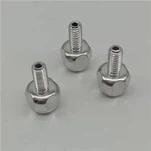
Precision mechanical parts processing refers to the manufacture of components with very high precision measurement and tolerances. These components are used in various industries such as automotive, aerospace, medical equipment, and electronics. After the machining process, surface treatment is required to enhance the mechanical properties, corrosion resistance, and wear resistance of the components.
Here are some common surface treatment processes used in the precision mechanical parts processing industry:
1. Electroplating: This process involves depositing a thin layer of metal (usually nickel, chromium, or copper) onto the surface of the component using an electrolytic solution. Electroplating can improve the corrosion resistance, hardness, and appearance of the component.
2. Anodizing: This process involves immersing the component in an electrolytic solution and passing an electrical current through it to form a hard, protective layer of oxide on the surface of the metal. Anodizing is commonly used on aluminum components to improve their corrosion resistance and durability.
3. Passivation: This process involves immersing the component in an acidic solution to remove any surface impurities and contaminants. Passivation is commonly used on stainless steel components to improve their corrosion resistance.
4. Powder coating: This process involves spraying a dry powder onto the surface of the component and then baking it to form a hard, durable coating. Powder coating can improve the appearance and resistance to scratches, chipping, and fading of the component.
5. Polishing: This process involves buffing the surface of the component using abrasive materials to remove any surface imperfections and create a smooth, shiny surface.
6. Heat treatment: This process involves heating the component to a specific temperature and then cooling it rapidly to improve its mechanical properties such as hardness, toughness, and strength.
In conclusion, the surface treatment process is crucial in precision mechanical parts processing to improve the mechanical properties, corrosion resistance, and wear resistance of the components. The choice of the surface treatment process depends on the material, application, and desired properties of the component.