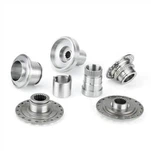
How to Control the Precision of Non-Standard Precision Mechanical Parts During Manufacturing?
Controlling precision during the manufacturing of non-standard precision mechanical parts is a complex and critical task that requires strict control from multiple aspects, including equipment, processes, and personnel. The following are specific measures:
Equipment and Tooling Jigs
Selection of High-Precision Equipment: Choose high-precision and stable machining equipment according to the processing requirements, such as precision lathes, milling machines, grinding machines, and machining centers. Advanced equipment features more precise transmission systems, higher resolution, and lower positioning errors, providing a foundation for high-precision machining.
Regular Maintenance and Calibration: Conduct regular maintenance and calibration of machining equipment, including replacing worn parts, cleaning and lubricating, and checking and calibrating precision. Develop detailed maintenance plans and calibration schedules based on the equipment manufacturer's recommendations and relevant standards to ensure that the equipment is always in optimal operating condition.
Optimization of Tooling Jig Design: Design rational tooling jigs based on the part's shape, dimensions, and machining processes to ensure accurate positioning and reliable clamping of the parts during machining. This reduces precision deviations caused by jig errors. Use high-precision positioning elements and clamping mechanisms to improve the jig's repeat positioning accuracy.
Jig Precision Inspection: Before using tooling jigs, conduct precision inspections and adjustments to ensure that the jig's positioning accuracy, clamping force uniformity, and other indicators meet the requirements. Regularly check the jig's condition during machining, and promptly adjust or replace it if there is any loosening or wear.
Machining Processes
Develop Rational Process Routes: Based on the part's structural characteristics, precision requirements, and production volume, develop scientific and rational machining process routes. Reasonably arrange the sequence and allowance distribution of rough machining, semi-finish machining, and finish machining, following principles such as machining surfaces before holes and prioritizing main features over secondary ones. This reduces deformation and error accumulation during machining.
Optimize Cutting Parameters: Select appropriate cutting parameters, such as cutting speed, feed rate, and depth of cut, based on the part material, tool material, and machining process requirements. Through experimentation and simulation analysis, find the optimal combination of cutting parameters to minimize the impact of cutting forces and heat on part precision, thereby improving surface quality and dimensional accuracy.
Adopt Advanced Machining Technologies: Actively apply advanced machining technologies and methods, such as high-speed cutting, precision grinding, electrical discharge machining (EDM), and wire cutting. These technologies can improve machining efficiency while better ensuring part precision.
Control Machining Environment: For high-precision non-standard parts machining, control the temperature, humidity, and cleanliness of the machining environment within a certain range. Install air conditioning systems and air purification equipment to reduce the impact of environmental factors on part precision.
Tools and Measurement
Select Appropriate Tools: Choose suitable tool materials, types, and geometries based on the part material and machining process. Using high-precision tools, such as micro-adjustable tools and precision boring tools, can enhance machining accuracy and stability.
Tool Wear Monitoring: Continuously monitor tool wear during machining, and promptly replace or sharpen the tool when wear reaches a certain level to ensure consistent machining accuracy.
Accurate Measurement and Feedback: Equip with high-precision measuring instruments, such as coordinate measuring machines (CMMs) and laser interferometers, to conduct real-time measurements and inspections of parts during machining. Provide immediate feedback of measurement results to machining personnel or control systems to adjust machining parameters and correct errors in a timely manner.
Optimize Measurement Methods: Develop scientific and rational measurement plans, selecting appropriate measurement references and points to ensure the accuracy and reliability of measurement results.
Personnel and Management
Improve Personnel Competence: Strengthen the training and skill enhancement of machining personnel, enabling them to master various machining processes and operational skills and to possess a strong quality awareness and sense of responsibility. Regularly organize technical exchanges and experience-sharing activities to encourage continuous learning and innovation among employees.
Establish Quality Management Systems: Develop comprehensive quality management systems, set strict quality standards and inspection specifications, and conduct quality monitoring and management throughout the entire manufacturing process. Strengthen the inspection of raw materials, semi-finished products, and finished products, and strictly enforce first-piece inspection, in-process inspection, and final inspection procedures to ensure that every step meets quality requirements.
Data Recording and Analysis: Record and analyze various data from the machining process, such as equipment parameters, machining process parameters, and measurement data. Through data analysis, identify factors and patterns affecting precision, and take targeted improvement measures to continuously optimize the machining process and improve part precision.